We would love to hear what you think?
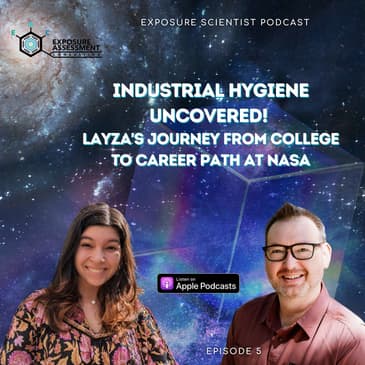
Welcome to "The Exposure Scientist," I'm your host, Dr. Alex LeBeau. In today's episode, we delve into the dynamic world of industrial hygiene with our esteemed guest, Layza. Layza shares her fascinating journey into this often misunderstood field and unwraps the layers of complexity industrial hygiene presents, from its analytical aspects to the opportunities it offers in entrepreneurship.
Layza confronts head-on the trials she faced in entering a male-dominated industry, the cultural shifts, and the language barriers that marked her early career. She recounts her experiences at the Kennedy Space Center, where she tackled unique challenges in hearing conservation and dealt with the deafening "crawler" machine.
We'll also get a peek into Layza's thought process as she navigates the potential career pathways within and outside of NASA, including the merits of becoming a civil servant versus a contractor, and the critical role of certifications like CIH and CSP in her professional growth.
Layza doesn't just share her story; she offers actionable advice for early career professionals. From balancing academics and job applications to avoiding burnout and prioritizing mental health, Layza's insights are a treasure trove for both newcomers and veterans in the industry.
So join us as we explore Layla's impressive contributions and the wisdom she imparts within the realm of industrial hygiene. Whether you're a seasoned expert or newly curious about the field, you're sure to gain valuable perspective from this deep dive. Let's get started!
Layza's Linked In
Contact Dr. Alex LeBeau at Exposure Consulting for exposure litigation support or Exposure Science Consulting.
[00:00:00] You might not realize it, but we are exposed to dozens of hazards every day. Can any of these hazards negatively impact your health? Definitely this is the Exposure Scientist podcast.
[00:00:13] My name is Alex LeBeau and here we answer your questions and concerns on what you may be exposed to every day. Welcome to the Exposure Scientist podcast. The views expressed in this podcast may not be those of the host or management.
[00:00:30] This podcast is for informational purposes only and should not be considered health advice. It is recommended that you consult the Exposure Scientist to discuss the particulars of your exposure scenario. Hello and welcome to today's episode of the Exposure Scientist podcast. Our guest is Eliza Erizari Colone.
[00:00:48] Eliza is an industrial hygiene specialist at the Agency of the Kennedy Space Center, the Agency for Occupational Health. She is also a recent graduate from the University of South Florida College Public Health with her master's of science in occupational exposure science.
[00:01:04] What we're here to talk about today, but generally industrial hygiene. Eliza, welcome to the program today. Thank you for having me here and just wanted to say this disclaimer before we start.
[00:01:18] The views expressed in this presentation or podcasts are those of the author me and do not necessarily reflect the official policy or stands of NASA. So just want to put that out there. I appreciate that.
[00:01:33] I invited Eliza here today because I had some interactions with her when I was doing some talking to the agency from the American industrial hygiene side of things and it came to my thought.
[00:01:44] My idea is how do we as exposure scientists and just your hygienist toxicologist, how are we going to view us? Get to where we are in our careers. So Eliza being a very recent graduate as she graduated in December of 2023.
[00:01:59] I wanted to get her perspective on where she got to from at this point where she is as of ours an early career individual in the exposure scientist realm.
[00:02:11] So Eliza, the first thing I want to kind of understand is can you give us a general background on yourself? Where you're from, how you kind of came to at least where you are today and they brought over view summary. Yes, thank you.
[00:02:28] So I'm from God was Puerto Rico. I was born and raised there till I was 13. I came to Florida around 8th grade, 9th grade. So my experience was mostly high school here and I had multiple culture classes. My English was not as well as it is now.
[00:02:51] So the language barrier was a struggle, but the reason why my parents moved us to Florida was to seek better education. And so my goal was to make it like make it a reality for them. That's my way of thanking them.
[00:03:08] So from there I was able to obtain a full ride scholarship from the Bailey family foundation. And I was able to pursue my degree at HCC and AA degree in Allied Health as well as my bachelor's at USF because I transferred.
[00:03:27] And I obtained my bachelor's of science in public health, no specific concentration because there's a vast of options in public health. But through my journey and that time at USF I came to realize later on through internships that I aged was the route I wanted to take.
[00:03:49] And it takes you know, I'm going to interject some of my experience here as well as you know, it from talking with a lot of people, you know, this is not something that you,
[00:04:00] you talk to your guidance counselors within high school and say, you know, I want to be an industrial hygienist. You know, not many people hear that terminology.
[00:04:08] You understand it and understand that you know are the goal of ensuring a safe and healthy workplace is what industrial hygiene does. You know, you hear about health and safety you, you kind of talk about it in a roundabout way.
[00:04:22] But so what was your, you know, if you were, if you did the bachelor's at university self-larit of for public health, well, it was was, it was industrial hygiene kind of interjected in those classes or just the general concept of exposure science.
[00:04:35] How how did you kind of elevate yourself to say, I want to be an industrial hygienist? So for my bachelor's in public health at USF, I did not specifically like was told by advisors or professors industrial hygienist a way to go.
[00:04:55] That was in really highlighted, except the OSF courses that USF has to offer. So it was a lot of environmental health and safety health or safety. It was never specifically for industrial hygiene. How I came about it was towards the end of my bachelor's degree.
[00:05:15] I applied for a internship as an environmental health and safety specialist at a manufacturing facility. And my mentor was an IH, his name is Wayman Aldridge.
[00:05:26] And he taught me about the how to assess equipment, how to use the equipment for monitoring taking samples such as like white samples air sampling personal and area samples, mold samples, all kinds of stuff.
[00:05:42] And I realized that the difference between EHS and IH is just a matter of the analytical and hands-on experience. So he introduced me to a del marine who went through the USF program and was also graduated, so kudos to her.
[00:06:04] And she helped me get in contact with Steven Malnarek, who was the director of the IH program at USF.
[00:06:16] And I was able to communicate with him if there was any grants or any association related to this program because that was the only way that I would be financially stable to continue my studies.
[00:06:29] And he mentioned the NIOSH ERC grant and he helped me with the process and the application which wasn't easy at all.
[00:06:39] But completely worth it because at the end of the day, I was accepted into the program and I received the NIOSH grant and that was a little summary how I came about to IH program.
[00:06:52] I think we all have interesting backgrounds to get there, you know, just a quick aside when I started off in undergrad at the University of Florida. I was I was pre-vent I was animal science and one to be a veteranarian and then it's time gone went on.
[00:07:06] I saw that wasn't the path that I wanted to do and I was exposed to someone who was in the masters MPH program at UF who was getting her epidemiological degree.
[00:07:17] So I said, you know, epic sounds like something I wanted to do. So I went down the USF I started in the FB program but I also as you just mentioned started working at the ERC it's called the Sunshine ERC education and research center at the University of South Florida.
[00:07:31] And I was working in the continuing education department there and when those people brought in continuing education. It's course instructors, they were all industrial hygienists and toxicologists and that's how I got introduced to it. I started taking some classes and said, this is more my style.
[00:07:48] You know, it's not I don't think a lot of people set off in the saying, I want to do industrial hygiene is kind of they're steered into it for a certain way to certain exposures and not because not many people know the existence of them.
[00:08:02] You know, industrial hygiene has been around 70 80 years, 90 years. You know, not many people say, you know, what is this big program because nobody really knows about it.
[00:08:13] So it's interesting how you got there. I always like to hear different perspectives and let people know that there are other options besides, you know, just basic science. So when you're in the undergraduate studies program and you've got to introduce them to these fields study kind of scenarios.
[00:08:30] You know, did they they kind of suggest you and undergraduate, hey, you know, we have a graduate program. You should explore this at all.
[00:08:38] Exposure science covers a broad subject area, including toxicology and industrial hygiene and risk assessment from occupational community or environmental exposure exposure scientists apply scientific methodologies to understand exposure risks in a black control when necessary.
[00:09:01] We at exposure assessment consulting have this expertise. Please reach out to us info at exposureconsulting.com for a free 15 minute consultation to discuss the specifics of your exposure scenario.
[00:09:15] So no, they did not highlight, but yes, they highlighted the main ones like epidemiology biostatistics, the obvious one that everyone pursues.
[00:09:36] USF does have OSHA courses, so they highlighted some of those certifications but not really the IH program and what I come to realize was that it's not a big cohort.
[00:09:47] It's probably a handful of people that go through the program and so not people people tend to go through the EHS program more because it's all online.
[00:09:59] When it comes to IH, you have to be in person to take those live classes and not most people seeking NIH are not like living with their parents or don't have a job both of them are already well developed with their life.
[00:10:16] And so they can only attend at night and that's sometimes a struggle imagine working like eight nine hours a day to then go to school and then repeat the next day.
[00:10:27] So maybe people were just not attracted to that or maybe the people seeking it were not really interested in those aspects, but at least for me.
[00:10:39] What the only way it intrigued me was because of the hands on analytical aspect of it that's I know it's not everyone's cup of tea, but that's what keeps the difference between EHS and IH.
[00:10:55] So I wanted to do that extra extra step instead of going into EHS and then maybe going for my PhD and IH or something else.
[00:11:06] I was like I need to jump the gun go straight ahead and learn every aspect of this before I may not like before anything worse happens or before I'm able to. Sorry, I wrote. I lost my train of the. I'm not.
[00:11:28] But um basically I wanted to just seek further information rather than just keeping it short and sweet and straight to the point because I'm not just a.
[00:11:44] In online learner that doesn't really help me I'm a visual learner as well as a hands on learner and those aspects helped me put into perspective all the intricacies behind EHS because the data tells you everything.
[00:11:59] It tells you how do you need to report what do you need to assess what do you need to anticipate or evaluate or control or your workplace.
[00:12:07] So I felt like that was necessary for me to have the overall range of the program, but going back to just USF and their advising. I did not feel prepared well enough to make an educated guess in what direction to go.
[00:12:29] I needed professionals within the industry to tell me what direction best fit me and my endeavors based on my background. So because I feel bad for saying it but most people when they hear industrial hygiene, they think dentistry.
[00:12:49] I've had multiple people say are you trying to be a dentist? Trying to be a dentist or you. I'm like the word and thus through your old should put you into perspective of what industry I'm trying to go into.
[00:13:02] I agree, you know, I always like to ask people I used to. I kind of don't anymore but I said you know, tell me what you think when you hear the word industrial hygiene and it'll send me some guy in an industry setting with like a.
[00:13:14] A Tyvex suit on to sleep in the floor or you know, you know, picture every dentist as you said so it's it's a feel that not many people realize is out there,
[00:13:25] but it's an important feel you know, if you're exposed to the OSHA part of it, you know, OSHA has identified industrial hygienists who's those people who can quantify what exposures are and determine the degree of risk from exposure to those types of substances chemicals.
[00:13:44] Biologicals with a heavier whether it's a qualitative or quantitative risk and not many people understand that that ability is out there. So that's I think it's important that you have to have caught onto that and it's I'd like to again use this information to disseminate.
[00:13:58] To say listen, this is where you can be as you know how you get that path there and if someone has, you know, has child, this baby can get a graduate graduate graduate,
[00:14:07] school or even in an undergraduate program for public health, there are other options. So one thing I think and one thing, oh sorry.
[00:14:17] But one thing I wanted to mention with the IH that should be talked about more and should be recommended more at universities is that this is an entrepreneurship path.
[00:14:29] If you have the credentials, the competency to run your own business because you have a full understanding of the regulations and standards and policy when in an industry. It's a great opportunity to be your own boss to. I completely agree.
[00:14:48] So one thing I want to ask you a little more about is use you stated your are from Puerto Rico, you came here when you're a nine or nine through 10th grade.
[00:14:59] Did you encounter any challenges from the I'll say culture shock or or whatever coming over here from your background to getting used to American the system here, etc. So I'd like to get some more information from you on that.
[00:15:20] Yeah, um, first of all the language barrier is definitely key because as you know Spanish and English everything's backwards.
[00:15:30] So me getting my point across was sometimes hard just because of the sentence structure or the way that I'm I tend to describe things rather than using a word because in English there's a word for everything.
[00:15:46] So that that was definitely a struggle to portray my leadership and my authoritative personality to a group whenever I can't even decipher words correctly.
[00:16:01] So that that was very hard at the time and as well as being five feet and a woman with an accent and they meld dominated industry manufacturing facility kind of made me go to.
[00:16:19] Be more of a masculine figure just because there were certain incidents while I had to go to HR because of certain comments.
[00:16:28] But again, it's just the type of industry these are people that go straight from high school or are most likely immigrants or are struggling with money and this is the only job they were able to have.
[00:16:41] And then there's professionals within that industry so you have everyone with engineering degrees or safety professional degrees. So it's a very awkward stage for me because I don't have the experience and for being a woman they don't take me serious.
[00:17:00] So that was a struggle in again putting and creating this authoritative personality of myself because I'm very friendly. I'm not as confrontational but these situations may be learn and become that person in an inappropriate way, you know, I don't have to be rude or mean about it.
[00:17:24] But it's being assertive and confident within myself. So I think it's normal, I think everyone goes through those processes at some point in their life. It's definitely something hard and did not expect it at the time but it is part of the work culture.
[00:17:47] So those were the kind of initial challenges that you kind of face getting into this field, getting into the occupational side of exposure science.
[00:17:59] Was there anything as far as you mentioned HR or are there any problems or any issues, you know, finding job for what you're looking for getting jobs?
[00:18:10] How do you, you know, how did you find your first entry beyond just, I'll say, internship kind of roles or kind of working while you're in your bachelor under grad time?
[00:18:24] How did you, I'll say, break that barrier to get into this full time correct because for me, I started as a 25 year old.
[00:18:35] I age most of the time people who are I ages are in their 40s because they first became any Hs have five years of experience to obtain their C I age certification.
[00:18:44] So that was a challenge within itself because when I was applying for these jobs, they were looking for someone with a certification and either CSB so safety professional or C I age.
[00:19:00] Or they were looking for someone with five years of experience and I think every college students struggles with this, like you're trying to find a job and they're seeking people with experience. So the way that I was able to kind of maneuver that was.
[00:19:19] Thanks to the Nile, she are C grant because honestly thanks to them the Sunshine ERC. I was able to participate in a lot of conferences and that networking opportunity that transfer of business cards and having that one on one conversation have those elevator speech ready.
[00:19:38] Because it definitely helps you put you on the market and sometimes I had like printed out resumes even though it wasn't a lot, it was just one page but I still had it ready to demonstrate someone like, hey this is my education.
[00:19:52] This is what I'm seeking, this is my background because at these conferences, OSHA and other organizations are hiring on the spot.
[00:20:01] So it's a great opportunity to kind of put yourself out there and networking, I age world is so small and not really into like if you go to the national conference but we are very like close knit group.
[00:20:16] And if someone knows about you most likely that person is going to transfer you to somebody else.
[00:20:22] But these conferences and these IH groups are very close knit and so if you network with them, you can communicate with one person and that person will kind of like spread the word about you and just let them know like hey I know this person seeking a job or hey I know this person hiring.
[00:20:41] And the same prospect is using on lengthen. So how I got hired in the first or hired in the first two internships that I ever done was through lengthen just applying for nearby jobs and looking for their prerequisites that matched specifically internship because I had no experience.
[00:21:05] And so I wanted to prepare myself because I noticed this issue. So I wanted to have at least a little bit of background so I can argue why they why this company should hire me and then for this last one, so me working at the agency level for NASA.
[00:21:26] I my professor at the time, he no longer is with us but I'm very thankful for him. He's Steven Malneric, he he connected me with Bart Gaier and they were currently looking for an IH specialist assistant to be part of the group.
[00:21:47] And he sent Dr. Malneric sent on an email asking hey is anyone interested and I was the first one to jump because no one else wanted to move to the East Coast of Florida.
[00:21:59] But I was willing to move because in this industry, honestly you have to be willing to move to seek better opportunities. So from networking, from knowing your professors, so to creating these dynamic friendships all those challenges kind of dissipate.
[00:22:17] Because within this industry is who you know and then you show them like this is how knowledgeable I am. This is how much of an expert I am. This is how I can improve and help you improve your EH programs at your workplace. So definitely be friendly.
[00:22:37] No, I think networking is a great way to do that. I encourage everyone to I mean network as much as you can. You know one thing.
[00:22:46] Have your information available and the digital age everyone wants digital business cards and all this stuff have paper cards people older folks still use paper business cards.
[00:22:56] If you're your bachelor's or your in graduate school, print out business cards that say you know university whatever and have your information in contact because you can say you're a student there.
[00:23:09] Now just have something for them to grab onto it's a memory for them to have that digital is great.
[00:23:16] But having something physical is even better like you said you cared around your resumes. You know years ago I would send out to my my resume or hand it out a lot of people are like nobody holds these anymore but there's one person.
[00:23:26] You may hold on to it and say I remember this person. I want to give them a call networking. I think is a great way that I encourage you to do it as much as you can go to mixers go to social events go to conferences.
[00:23:38] I think it's great. And I don't think that, you know, I think that's one thing that we've kind of missing missing in our virtual world hopefully it's coming back. But even for like the online kind of programs it's very hard to know your classmates or your students.
[00:23:51] Even if they have like a once a month online thing go to it. You know, I think that's a great way that as you said it's a great thing to do because there are connections you're going to find and you can lean on them at some point in the future.
[00:24:06] And my cohort honestly was the best cohort our professors like the so much they were like we've never seen a group so interactive and we were the biggest and we were seven. Megan's whole cohort and we were only seven.
[00:24:22] But we always helped each other out. We whenever we saw a job offer we would send it to someone else like hey, I can't really do this but if you're interested, check it out.
[00:24:34] So we always supported each other and wanted the best and we're we all I can tell you currently all of my cohort has an eye. That's awesome that's great.
[00:24:47] So it's great to hear that everyone support each other and you got the role that you want, you know, the whole goal is to work in the field that you are going to school for and and there are.
[00:24:58] Plenty of opportunities for industrial artists like I said something like you said sometimes you're going to have to be willing to move somewhere else or willing to accommodate with their requests are because of the nature of the job.
[00:25:14] So speaking of the nature of the job, did you in what detail you can supply kind of discussed your role in ass and what you do all say on a daily basis or what your goals are or what you're doing at the space center.
[00:25:28] Yeah, so I work at the agency level. So KSC is my home base but it's they're not my boss and we're not like it's word separate entity we are just base there.
[00:25:44] I work under the Office of Chief Health and Medical Officer, but my manager is the senior environmental health officer and we facilitate all standards and policies within all 14. NASA sites so my role is to learn all these different 14 personalities and accommodate them.
[00:26:11] And provide them recommendations as well as keeping them up today with the policies and standards from OSHA CDC NIOSH any grand federal regulation that happened. We have our own NASA standards, so that is also separate and we.
[00:26:30] Anything that was not touched based under the OSHA regulations or NIOSH we create this standard to provide them further assistant and further details and on what to do in certain scenarios.
[00:26:45] So we have an all in all EH section where we touch base on bio safety, ergonomics, hearing conservation, as best as just anything that has not been mentioned because we we do not want to just copy paste. We want to help guide them.
[00:27:15] We want to help guide them. Kind of function as like OSHA citations, but we're helpful. We're not finding them.
[00:27:52] We're preparing them just in case of there's a certain situation going on and OSHA has been called and they're going to be evaluated is just for them to be prepared.
[00:28:04] As well as to upkeep and maintain their standards on all of their policies as well as programs because our ultimate goal is to have quality and consistent EH programs throughout all of our EH or all of our NASA sites.
[00:28:22] And we also have tend to attend to facilitating facilitating working groups, so we bring in professional speakers from again professional organizations OSHA NIOSH or professors and you were also one of them.
[00:28:39] So we're working groups specifically for hearing conservation, as best as ergonomics, indoor environmental quality and we just focus on providing them and providing them information inside.
[00:28:57] We're working with a lot of people who are working with the program, and we're working with them to improve or create for their EH programs. So it goes very into depth. I think the hardest part is just this is a multi contract organization.
[00:29:18] And on the standards for that specific state, for that specific NASA site compared to all of the other ones.
[00:29:26] Like California, they have the OSHA cow. They have their own state laws, they have the NASA standards it's very it gets very intricate and very political in certain aspects so. We are just trying to maintain those collaborations, those connections and making them.
[00:29:49] Making them the best that those centers as best as it can to be the to have the appropriate information to run their EH programs. So then this led to me leading another group which is the early career and young professionals working group.
[00:30:08] And this is our attempt in providing, in retaining and attracting young professionals into NASA as well as creating an environment for competency growth for knowledge growth for career development professional development and other skills for us to continuously improve the quality and consistency of our EH programs.
[00:30:36] So it's, it's a management role I would say.
[00:30:43] I went from doing a lot of hands-on work to mitigating policies and policy changes and standards and a lot of research and a lot of reporting and a lot of just understanding why certain things need to be implemented in certain areas to prevent future incidents.
[00:31:02] etc. So it's more book work rather than hands-on but I genuinely enjoy it because I think this is the background knowledge I need as a professional to fully embed myself into the IH world and my role as an industrial hygienist to make accommodations and make good.
[00:31:32] Our global points for me to go on the for me to provide for IH's at other centers because one thing that I've noticed is that IH's are salespeople. So I consistently selling your services to your own organization.
[00:31:54] There's a lot of finances that come into play so at the end of the day you need to be able to confidently argue your stance as to why a budget should be adjusted for X, Y and Z reason to benefit this EH program.
[00:32:14] So it's I'm a little bit of everything. Currently in my role I'm a little bit of everything and I think I have very knowledgeable mentors that have guided me in a lot of ways throughout this process and they have not let me down and I'm very happy with this awesome so based on what you described and working across multi sites and dealing with all say different levels and different perspectives.
[00:32:44] I think that's a great example within the agency. Have you faced any unique challenges that you can think of or something you said, not normally would industrial hygienist maybe face this in a typical scenario or just something that you thought was kind of unique in your own scenario.
[00:33:03] I think the most unique thing is at KSC. The crawler. So there's a lot of here in conservation efforts at Kennedy Space Center and.
[00:33:14] I did not realize the extent of the PPE and policies and mitigation strategies to prevent hearing loss because we're consistently monitoring or not we because I'm not part of it, but the comet contract at Kennedy Space Center has had to deal with.
[00:33:36] The T. S's regarding hearing hearing loss so when it comes to the crawler. One thing that they were struggling with is communicating and also preventing hearing loss, so they've developed these devices and for I think I'm correct but with 3m.
[00:33:56] I believe the crawler kind of initiated this initiative and they were able to develop these ear muffs and headphones where you can it kind of kills the sound around you and only picks up human voice.
[00:34:13] So you're able to communicate in these high noise areas and provide proper instructions and information because at the end of the day. The crawler is a massive instrument and injury and can happen at any moment if you're not paying attention so.
[00:34:35] Being part of the process not per se. Like the determination of everything but being part of the process of analyzing that whole scenario was quite interesting and intriguing and it made me realize that this is not your typical.
[00:34:57] Nine to five job at a random manufacturing facility we're working with rockets, we're working with heavy machinery, we're working with. A lot of equipment and instrumentation that your typical manufacturing facility doesn't have and it's all for the goal to go to space.
[00:35:20] This is quite interesting overall the kind of projects and. And just just for clarification purposes from those that are I'm in central Florida I know vaguely will familiar with operations over there could you detail what the crawler is for those who may not be familiar.
[00:35:42] Yes, so the best way to say it in simple words it's the machine that carries the rocket to the launchpad. So I'm trying to think of the size but just imagine like for semi trucks combine together side by side for.
[00:36:03] Or in distance wise and it I believe it was considered the. This the slowest moving vehicle I think it goes like two miles per hour very slow machine doesn't really go that fast you can find more information about that online sorry if I'm wrong.
[00:36:21] But it's it's quiet but it can be it's quite large and move slow and it is the loudest machinery that exists.
[00:36:32] I can it is. Thank you. I appreciate that so you know I mean it sounds like you have a lot of work I mean there's a lot of things are going on a lot of different you know I was I say in the consulting world a lot of balls in there and you have things you have to manage a certain times and emergencies so.
[00:36:47] What what have you identified is as an early career individual in this you know fish finishing grad school may be working while your end grad school worrying about of job getting that job finishing school finishing your thesis.
[00:37:02] What what have you identified as the best way to balance work and life and and and kind of let go of some of the stress that you're dealing with during all these processes.
[00:37:13] So first things first when applying for a job please let them know you're taking a degree. Please let them know that you're still studying and provide them with the length of time like when are your courses when are you taking these courses because they will they will highly likely I don't know if every place but they will highly likely understand.
[00:37:42] And sometimes higher you even though you're so pursuing your degree. The only thing you need to do is just argue why you're in as you would be an asset to their organization as well as how can you.
[00:37:58] How is you working for them going to improve what they already have and so as long as you can show those points you're you still have a chance but.
[00:38:08] And so I think these people think that going into these work, these work areas these jobs they expect the worse and.
[00:38:18] And they're assuming like oh I'm not going to get the job because of me still studying that's not correct at all go for it just let them let them know that you're still seeking a degree.
[00:38:31] But I believe that the best route to have this the most successful experience with work school and ever in life is. Start off with the degree that you want look into internships so you know what you want don't just go for the first thing that's available.
[00:38:56] Oh, I think I like this no as why internships exist for three months you can try out multiple different areas and be a well rounded individual and then you you can make a.
[00:39:08] Determination in what route you will prefer to go. I was a safety engineer for another manufacturing facility I was an EHS and now I'm in policies and standards like there's multiple areas to IE twirled so I definitely recommend taking some. Internships or some courses or.
[00:39:30] Look up a couple of YouTube videos and just get a full understanding of what route you want but never forget to just. The compress people think work work work is always like school works sleep eat like repeat the next day.
[00:39:50] Always try to find some time to just do something you love for me that was painting there was a certain point where I started selling my paintings for fun.
[00:40:04] I would get commission and I was just paying for enjoyment and that was kind of my way of the stressing because the weight of the world is a lot.
[00:40:12] Especially as a college student you feel like everything is just falling over you and you have no idea where you're going.
[00:40:22] And anxiety is the thing depression is the thing so be aware of your mental mental health as well as take the time to go outside workout go for walk you do not need to be lifting heavy power lifting or any of that just take a few moments to.
[00:40:42] Relax your heart rate and dedicate time to your body because it healthy body means a healthy mind and you can take on whatever you want because nothing is impossible it just takes time and there has been a lot of.
[00:40:58] Entrepreneurs in the world like Tesla Microsoft Apple that it wasn't their 40s when when they figured everything out so I think we're stuck in this mindset of.
[00:41:13] I'm in my 20s I need to figure out I need to be married I need to have a job I need to have a house and into this society that's a little bit hard.
[00:41:22] So instead of just putting pressure on having everything figured out in your 20s just take it one step at a time and it's okay to have it figured out in your 30s or 40s.
[00:41:33] Everything is a process enjoy the journey don't rush it because it's going to fly by super quick and you're going to miss out on a lot of things.
[00:41:42] I think that's great idea. I mean, I've seen people who want to hurry through everything and getting the experience to handle those scenarios and situations at our stressful.
[00:41:55] I think is very helpful because there may come in time and point where no you're looked at for advice and you may not have it and what do you do you know you were you are the expert in that area.
[00:42:06] And if you did not also mentally physically prepare yourself for that scenario. It will just add stress to your life. So I think taking time for yourself is vastly important and I'll say early career or mid career for myself.
[00:42:24] And that's one thing I wanted to mention to sorry for interrupting. One thing was when it comes to your job just be aware that not taking every task that is given to you is the best scenario or best idea if you feel overwhelmed with everything else.
[00:42:46] You take the time and explain it to your mentor like these are the projects I can take on right now. These are my plans for the future projects and just take it one step at a time.
[00:42:58] I know that everyone's perspective is to show off the leader take on multiple things and that is good, but being overwhelmed can sometimes bring down your product, bring down your efforts and you're probably giving only 80%
[00:43:15] and rather than giving 120% and I would rather have 120% perfect work or not don't strive for perfection, strive for excellence. And that's what my my mentor currently always tells me. And I've just carried that with me the whole entire time because it's true.
[00:43:35] Perfectionalism isn't always okay gives you more anxiety and stress. Take everything once that's about a time so just want to know I appreciate that so you brought up how to deal with things and moving forward so as far as your.
[00:43:50] And say short and long term career goals is like in as an early career individual have you thought about where are you like to be in five years or where you'd like to be in 10 years.
[00:44:00] Do you think of those terms or you just think of milestones you'd like to hit and then say, you know don't stick by the five and 10 year thing say I can do that in 80 years or 12 years how how do you deal with those kind of forward thinking for your career down the road.
[00:44:15] So when it comes to NASA there's two roles that you can kind of seek within NASA and that's being a civil servant or being a contractor.
[00:44:26] So because of my age and where I'm at in my career this is the perfect time to start thinking about that and what direction I want to go.
[00:44:35] From one of the civil servants there's certain steps that I need to take in classes and courses and programs etc that I need to participate in and attend to qualify to be a civil servant.
[00:44:48] So I'm still in that stage trying to figure out which route I want to take because when it comes to contractor.
[00:44:59] It's kind of a little bit of a high risk because contracts end and the management my switch to a different contract and I may or may not stick around it's dependent on whoever else who's the next person to take on that contract if they want to keep the same personnel or not.
[00:45:18] So it's a little bit of a high risk but sometimes it can be higher pay job. So I'm taking a step by step.
[00:45:30] I believe this I've only been a year with them so I'm waiting till when I'm closer to the end of my contract to kind of make the determination of what route I want to take.
[00:45:43] But there's also other opportunities that attract me and that is working for either the US Army because there's a lot of IA opportunities to go overseas and I would like to experience living in a different country.
[00:46:01] But that's my personality. I really enjoy traveling and I enjoy just experiencing other cultures and meeting new people so from my background my father is Army veteran. So I'm kind of used to the dynamic and the personality not everyone is okay with the Army.
[00:46:26] Grunge and like how hard working they are and they like you have to unlearn everything that you've learned and learn it there are me way so it will be quite intriguing but I'm kind of used to that kind of background.
[00:46:41] So I'm just taking it one step at a time and hopefully through prayer I see a path opening for me and I would continue to step towards that path because right now it's still the beginning of my career and every decision that I make is for the betterment of my career.
[00:47:02] I can't stay somewhere for the benefit of someone else. I have to focus on myself and that's the mentality that I have currently. I love my job don't get me wrong.
[00:47:15] I love NASA and everything that NASA does. It's great to be part of an amazing group but that thought is still behind my head because I have to focus on it.
[00:47:27] Sure, no, I mean it makes complete sense. I think but you know next question I'm going to ask you is kind of thinking of yourself as well but how yourself can give after obtaining this so have you thought about becoming a certified industrial hygienist to see IH.
[00:47:44] Yes, I've thought about it. I just need more experience to take things out. So that is in the horizon I'm thinking hopefully in two years or so but that is the downfall of getting my master's degree so young specifically in IH.
[00:48:07] But there are other certifications that I can take like the CSP. But I've been told that if you take the CH you kind of don't have to take half of the CSP so it's they I've heard from people wait till you take the CH and then take the CSP so it's a little bit complicated.
[00:48:28] But there are certifications that I'm looking into just to get kind of give myself credibility what in this industry because that is key to make yourself known. If I don't have something specific like I'm an excesses expert or hearing conservation expert I need to build credibility through certification.
[00:48:51] I think that's a great idea. I mean I highly recommend CSP for everybody who may wonder certified safety professional.
[00:48:58] I highly recommend you you as an early career individual obtain certifications especially if they're free a lot of times through universities will offer kind of classes containing education classes you participate in no kind of a certification.
[00:49:14] And either kind of hearing conservation or something else I highly recommend you take those free classes not a lot of people know about them when I was at the ERC we tried to send out that information to all the different groups of any students wanted to participate us free for the students it costs a participant's money.
[00:49:31] It's got free access if there's free access to classes I would highly recommend you take them because you know that is going to help you way far down the road.
[00:49:43] Yes, I was able to through the NIOSH ERC grant I was able to attend the seminar for industrial ventilation and i then I have to pay a dime they paid for everything and they gave me this industrial ventilation Emmanuel of recommended practice for design.
[00:50:03] There was also the second book which is the industrial ventilation Emmanuel of recommended practice for operation and maintenance which is the second edition.
[00:50:13] So all of these resources were given for free because of the grant as well as if you attend these conferences some of these booth around the conference give you free CH equation practice as well as the ASP exam essentials and they have.
[00:50:32] CSP as well so there are opportunities for continuing education and sometimes even your job does covers all the costs for these same activities so do not be scared to ask. No, I don't think so.
[00:50:54] Exactly because it is to build your it's for professional development and if it's going to better them to have you as a more knowledgeable expert in their organization of course are going to do it.
[00:51:10] So please take the time to for continuing education search certifications and just stay in your keep yourself up to date with whatever's new in the industry.
[00:51:23] I think that's great idea there's lots of ways to keep up on what's going on I think that's knowing what's going on I think will benefit you if you're applying for jobs or you know in a real interview is for jobs because you can speak knowledgeable about current events or current issues.
[00:51:40] I think with any type of profession for the exposure science industrial hygiene, typhonicology there is always continuing and furthering your education and knowledge and I think that's what is important for the early career individual is you know.
[00:51:57] I think this is not stopping graduate school ends it's just the door that opens further learning and further information so I think that's great advice for those early career individuals so as we end today's program I kind of like to ask you if there's any.
[00:52:15] I think that's great advice overall advice that you can. Offer to those early career individuals or people who are applying for jobs now or maybe finishing up grad school in the spring.
[00:52:27] What kind of overall kind of thought can you provide to them as a conclusion to this as program. I always said trust your gut trust your instincts most of the time they're right.
[00:52:41] Please try to get involved with an association and a leadership role thanks for me being part of the Florida AIHA local chapter section.
[00:52:55] I was able to run for a certain position so I'm hopeful that I am able to obtain that position but that is also my way in still being involved in continuing education because they have a PDC.
[00:53:09] Today which is the Thursday of the conference overall so it's a great opportunity to just get involved and network and get to know more people. Ask questions if you do not know or you don't have an answer at that moment.
[00:53:29] I ask questions whenever you don't know the answers but also if you do not know the answer please do not hesitate to take a step back and just let them know give me a few days or a few hours whatever you need and I'll get back to you.
[00:53:49] That is way more professional than you saying something that is completely incorrect because that is key you need to keep it professional.
[00:54:01] I always do your research so whenever you take that time do a thorough research because people will come back and say but what about this policy why didn't you mention this so try to get all of your notes and documents in order.
[00:54:22] I ask your thoughts or to talk to your senior management go to your mentor first don't react on emotions react on logical thinking and rational thinking because you don't know if certain actions may trigger your downfall in that specific career and I'm just being honest.
[00:54:49] And be well educated at the end of the day when. Like presenting your reporting or presenting a presentation regarding a certain topic to your organization.
[00:55:04] Try to look into every aspect of what you're what you're presenting because I H's are very knowledgeable experts and someone will call you out this is the number one group that will call you out.
[00:55:21] And always just put your best forward always have the best intentions and be friendly and never never give up that is one thing.
[00:55:31] Being an industrial hygienist never give up because there's always an answer so just continue to conduct test and samples and you will figure out an answer for it.
[00:55:41] And that is it for me awesome lies if that is great advice thank you so much for joining us for today's episode the exposure scientist product podcast we really appreciate your insight and your information so thank you for your time. Thank you go bulls.
[00:55:58] Thank you for listening to the exposure scientist podcast you can connect with us at our website expo your consulting dot com where you can book a private consultation and send in any questions regarding any episode. or our guests see you in the next episode.