
We would love to hear what you think?
In today's discussion, we're going to unravel occupational exposure standards such as TLVs, OELs, and PELs, and touch upon the challenge of setting safe levels of exposure for both workers and neighboring communities, with real-life examples from industries including nuclear waste treatment and oil and gas.
We'll take a closer look at the multimillion-dollar efforts made to educate workers on daily risks, the involvement of exposure scientists in legislation, and how this affects industry-specific solutions. Dan will share his insights on the shift from traditional industrial settings towards evaluating community exposure, advancements in industrial hygiene technology, and the potential of AI in exposure assessment.
Our conversation will also cover the importance of consistent access to expert guidance, learning from past mistakes, and the current state of OSHA and industrial hygiene. Furthermore, we'll discuss the identity crisis OEHS professionals face and the evolving roles of exposure scientists in emergency response, occupational health, and safety assessment roles.
We'll tap into the challenges of balancing preventive measures with effective risk communication, the importance of documenting safety procedures, and Dan's personal journey from early work experiences to being a leader in the field.
So stay tuned as we expose the critical and multifaceted role of exposure scientists in fostering a safer and healthier environment, both at work and beyond. And remember, if you have any questions or need expert consultations, please connect with us through our website after the show. Let's begin.
Contact Dr. Alex LeBeau at Exposure Consulting for exposure litigation support or Exposure Science Consulting.
[00:00:00] You might not realize it, but we are exposed to dozens of hazards every day. Can any of these hazards negatively impact your health? Definitely! This is the Exposure Scientist Podcast. My name is Alex LeBeau and here we answer your questions and concerns on what you may be exposed to every day. Welcome to the Exposure Scientist Podcast.
[00:00:26] The views expressed in this podcast may not be those of the host or management. This podcast is for informational purposes only and should not be considered health advice. It is recommended that you consult an Exposure Scientist to discuss the particulars of your exposure scenario.
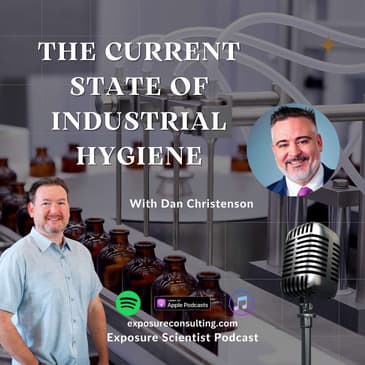
[00:00:42] Welcome to today's episode of the Exposure Scientist Podcast. My guest today is Dan Christensen. Dan is the director of sales at Bureau Veritas Industrial Hygiene Laboratory Services. Dan, welcome to the podcast.
[00:00:55] Thanks for having me Alex. Pleasure to be here.
[00:00:58] Of course like I always like to ask my guests please tell me about yourself if you're an industrial hygienist, you're working in a laboratory. Please tell us a little about your experience.
[00:01:08] Yeah it's been a wild ride. This is one of those fields that you didn't know it existed until you were introduced to it.
[00:01:18] Is correct. No kid in kindergarten is like I want to be an industrial hygienist when I grow up.
[00:01:26] I don't even know where to start. I guess I wasn't a great high school student but mostly just because I wasn't interested in most of what was being taught because it was all I don't know.
[00:01:41] It's just background and theory. I had things I liked. I always excelled in the sciences. I did my best to keep up in math with my peers just because I always had a bit of a
[00:01:53] little bit of a problem. If you can do it, I can do it. There's no reason why you're better than me so I can take that same class and I applied myself about as much as I was interested.
[00:02:07] But I always had in the back of my mind because my dad was a military guy that growing up as an army brat, you always have in the back of your mind well I'm going to go in the military.
[00:02:18] I struggled to find that interest in going to college just couldn't see why. I ended up doing a whole bunch of stuff.
[00:02:28] I've always been a worker so when I was 11 and I needed money, I started delivering newspapers before school.
[00:02:37] I spent most of my summers in high school printing t-shirts in an unair conditioned warehouse in Arizona.
[00:02:45] Really getting that kind of hands on working experience and then after high school I went into construction.
[00:02:53] I was confident in my ability to do things. Ironically I was experiencing some things. When I printed t-shirts you washed the ink with mineral spirits.
[00:03:06] You just had this tank at the back that was like where the new person had to scrub the ink off of all the screens and everything and do all the clean up.
[00:03:14] You're discovered in mineral spirits and as a kid, I don't know. I guess it's okay.
[00:03:23] But then I worked construction. I fell off a roof. I cut myself 100 different ways.
[00:03:30] I learned by hands on experience some of these things that we look at in occupational health space and safety space.
[00:03:40] By the time I found myself in college in my mid 20s, my girlfriends soon to be my wife started to solidify on how I needed to find something in life that was going to be more than an hourly job.
[00:03:56] I had a roommate who was an engineer so of course I was geared towards engineering because if he can do it, why can't I do it?
[00:04:03] I was in the civil environmental program but I also worked. I never stopped working. I was working in factories and foundries.
[00:04:12] I struggled to keep up with the course load quite honestly. I just didn't have time for the homework.
[00:04:19] I finished school and went and worked the late shift until two in the morning.
[00:04:24] I went and talked to a dean and he said, you know, with your science background and the credits you've got, go talk to these guys in the biology building.
[00:04:33] I went over there and I passed a copy of the industrial hygiene news that was posted up on the wall.
[00:04:38] It was the salary survey and it said, you know, certified or said civil engineer X amount of dollars per year.
[00:04:46] Then right under it it said industrial hygienist same amount.
[00:04:49] I'm like, whoa these guys make as much as starting civil engineers so okay maybe this isn't because I was having a kind of a morose walk from the nice engineering building over to the decrepit biology building.
[00:05:02] The building everyone avoided on campus and I fell right into it because I had those industrial experiences, you know, noise and welding and construction and safety.
[00:05:16] All that stuff and so it was just like water off a duck's back when I got into class plus I was five to seven years older than most of the people in there.
[00:05:25] So I had had some life experience long story short, I graduated very motivated to move on in the field and my internship in school had been through copper mining.
[00:05:37] So I was exposed to again another industry you don't know exists unless you're brought up around it mining.
[00:05:44] So I think it's about a career in mining and so I was recruited by a mining company based out of Australia and they had a co operation in New Mexico.
[00:05:54] From there I got my teeth cut my teeth on being an industrial hygienist and then exposure to not just us regs and compliance which is pretty much what we were taught in school.
[00:06:06] And then really having to jump into the world of ECG I H and international standards because the company based in Australia obviously operated to some different industrial hygiene rules so that really got me going.
[00:06:21] So I was taught into the idea of getting certified as a C I H as quickly as possible but without really a mentor I kind of had to develop my own path so I did the OHS T in the first two years after graduation then I started on the CSP track because I could get into it earlier.
[00:06:39] I was going to ask the ASP the CSP and then as soon as I was able to take the C I H exam I took it.
[00:06:45] I did not pass it the first time as most people don't but eventually passed it and by that time I had moved to the petroleum world I'd done a bunch of offshore and onshore oil and gas.
[00:07:02] And then a consultant that I hired had an opening for a director in their consulting division of their emergency response company and I moved to Arkansas and I led that industrial hygiene group for six years.
[00:07:15] And that was really really mind expanding because before I was industry focused right and now it was industrial hygiene focused which was you know a call could come from anybody for anything at any time.
[00:07:29] And I had a great time there growing people taken brand new people out of school taking people who didn't have any industrial hygiene background and just you know trial by fire you know I took the kid to the OSHA oil and gas conference just hired on had a master's in biology didn't even know the words industrial hygiene.
[00:07:50] And I had him standing at the booth with me and a guy comes up and he's like so tell me about your capabilities with noise you know assessment I'm like well you're in luck because Justin here is our noise expert.
[00:08:04] You know I let him stumble around for about 15 seconds but it was really to kind of say this is the kind of stuff people are going to ask us this is the kind of stuff what we've got to know and we've got to be able to respond.
[00:08:17] So that really you know set the mindset of how quickly you need to get up to speed with this stuff and we're not going to hold your hand and it worked out great that kids gone on to different company.
[00:08:29] He's like a senior industrial hygienist now so I'm what a cool story to be involved in something like that right to be able to mentor somebody I completely agree.
[00:08:39] Yeah it's awesome it's awesome I got there and there was a guy who didn't know it but he was a better industrial hygienist than I was and he was not being compensated to the level he probably should have been so I was at high risk of losing the best hygienist on my team if somebody came along with a better offer and I really had an a lever support for giving him a significant increase unless he got his C.I.H.
[00:09:08] and I was like dude just sit for the certified industrial hygiene exam. Oh I don't know I you know it's not my field I'm like no no it's your field trust me here's the study material study it take it run with it
[00:09:20] and you're not going to pass okay but it's going to tell you what you need to study for next time and so that's what happened he took it didn't pass and it told him the areas you needed to study he studied them he passed now he's got the credential to go with that great field experience that he had and he's a fantastic industrial hygienist.
[00:09:38] So I really love that what I didn't love was the emergency response side where you had to jump out you know pick up the phone and then leave and you didn't know when you were coming back.
[00:09:50] That's hard I mean I've done that you need to be ready within 24 hours or be somewhere within 24 hours it's hard it really gets the last flight out a little rock to DC right like the samples are arriving at 10 in the morning you better be there you know like
[00:10:05] so yeah I mean but it was great experience don't give me wrong I mean I was just watching the news about that Baltimore bridge collapse and the captain of the port of course is running it because it's the ship channel in Baltimore.
[00:10:20] I worked as the safety officer on a ship collision in the Houston port channel and worked in an ICS underneath the ship the port captain you know Coast Guard captain there and got to see that for 20 something days
[00:10:36] and that was an amazing experience.
[00:10:38] So I kind of reflecting on that you know reading today's news and then I looked for something a little more stable I got a wild hair I put in for a job on LinkedIn that was in Switzerland they called me the next day took quite a few months to move over there with all the approvals because I actually had to immigrate to Switzerland
[00:11:01] and then shortly after that with my family COVID broke out I sent them back here to the house in Arkansas and then I spent three years traveling back and forth between Switzerland and the US
[00:11:13] and when all COVID finally wrapped up I just I couldn't see us moving over there permanently so much had changed so I started looking for work back here in the States that's how I ended up with Bureau Veritas which was a great opportunity because how many years I was going to be there
[00:11:29] because I was going to be able to do that opportunity because how many hygiene is get hired into a pure sales role.
[00:11:36] So again it was this great opportunity to just do something completely different but also related and you know it just it fit in that niche of doing something new and different
[00:11:48] and you know that after learning kind of growing thing that I've got no one else.
[00:11:53] So I'm hoping industrial hygienists in your current role. Absolutely.
[00:11:58] Well I brought Dan on today and thank you for giving us kind of your background.
[00:12:02] I brought Dan on to kind of talk about the current state of industrial hygiene he's had a lot of experience industrial experience consulting experience practical application and now from the laboratory side so I kind of want Dan to kind of give us an idea
[00:12:15] of how he sees from his experience previous experience the current state of industrial hygiene so based on your professional experience and how it's kind of
[00:12:26] shaped your view of industrial hygiene. How do you kind of currently see the field you know how do you currently view
[00:12:34] your experiences in our actions and the field from perfecting from protecting health versus protecting safety within the workplace.
[00:12:48] Exposure science covers a broad subject area including toxicology industrial hygiene and risk assessment from occupational community or environmental exposure.
[00:12:59] Scientists apply scientific methodologies to understand exposure risks and apply controls when necessary.
[00:13:06] We at Exposure Assessment Consulting have this expertise please reach out to us at info at exposure consulting dot com for a free 15 minute consultation to discuss the specifics of your exposure scenario.
[00:13:19] So I'll throw Oshia a bone here.
[00:13:29] They're not the best funded organization of the government.
[00:13:37] So I think that they operate best where I think the political winds are blowing at the time and a lot of it's been my experience that a lot of government action is reaction you know
[00:13:56] and the department of Homeland Security came about because our existing agencies couldn't talk to each other enough to prevent a terrorist attack.
[00:14:08] So you know there's when there's outrage around something on the health side and I cut my teeth early on the in the mining side so I kind of think of M.
[00:14:19] I think more than I think of Oshia but M.
[00:14:21] She's even less respected and I think they have been minimized even more so than Oshia in recent years.
[00:14:29] Right right and what it takes for M.
[00:14:31] Should to be able to do anything is some sort of like national tragedy and it's often said in a little bit of dark humor that you know every M.
[00:14:42] She regulation is written in blood and I think that there's a lot of truth to that because it takes even on the Oshia side if you look the yesterday's history was the triangle shirt shirt waist fire in the early 1900s.
[00:15:01] That killed 145 immigrant mostly women workers in a garment factory in New York right and there were chained up doors and stairwells and you know fire escapes didn't work and so these safety related things it was kind of a pivotal moment in that that field of occupational health and safety even saying that it took until the 1970s for Oshia and M.
[00:15:22] She had to come about as governmental authorities right that being said Oshia mostly their regs are just adopted and see an A.
[00:15:31] S. T. M. best practice standards you know there's nothing really novel there even even the early P.
[00:15:38] E. L.s. or just adopted AC G. I. H. T. L. V.
[00:15:42] S. T. E. S. same thing with with M.
[00:15:44] She so it's not like those agencies invented anything they just had the authority to go about enforcing.
[00:15:53] And I think that had some good effect, some negative effect. It's always push and pull.
[00:15:59] But the state of occupational health, I think when it comes to OSHA is certainly more safety related because that's where the fatalities, the immediate outrage, the reactionary expectation is, you know, when a crane collapses in New York, it's all about crane safety for the next.
[00:16:22] You know, six months when it went a mine, you know, explodes. It's all about, you know, how do we, how do we better protect miners and I think where the industrial hygiene and even to the extent of health and safety generalists are concerned on the private side.
[00:16:43] There's a lot more that can be done preventively through good communication with companies explaining being able to communicate risk, being able to communicate return on investment.
[00:16:59] And you know, holding companies to their internal, not really standards, but they're internal values that are promoted that, you know, I always see this when I find it funny.
[00:17:15] Our workers are our most valuable resource. You know, and that's like, oh, the economy turned down because of inflation. So we're going to cut 20% of our workforce. And you're like, oh, you're, you're cutting 20% of your most valuable resources is what you're saying.
[00:17:29] Yeah.
[00:17:31] So there's a balance there, right. And we as occupational health and safety professionals have the ability to be that communicator between, you know, hey, this is what we say that we believe in as a company. This is what we need to do to live up to that.
[00:17:51] And, and then kind of hold the feet to the fire.
[00:17:55] Part of the problem with that is we're scientists. We are not great communicators.
[00:18:03] Not in the way that is needed for that. Right. We're not PR people.
[00:18:09] So my time at the emergency response company, I learned a lot about communication. There's a lot of great information out there.
[00:18:19] And some of it's, I don't know, see, it's not manipulative, but it's framing. So like, if you're going to have a meeting with the community and there's been an incident in their area, a trained arraignment, a pipeline release, a chemical plant fire, something outrageous has occurred that in their, in the community's mind should not have occurred.
[00:18:38] And you're going to hold a briefing. And you're going to tell people what you believe the real risk is in relation to their felt experience, you know, I smell this it's got to be bad for me. Yeah, yeah, probably is if you were exposed to it long enough and a high enough concentration and so on so forth.
[00:18:58] But if you hold that meeting in a church, people are much less likely to get out of control because of the environment as opposed to if you hold it in a school or in another public location, you know, just because the idea of it's a church.
[00:19:16] You know, and so there are things that we can do. And one of my, one of my professors in uni was very a popular fan of Peter Sandman. I don't know if you're familiar with Dr. Peter Sandman he talks about familiar risk communication is a lot more popular in the 90s than he is now, but his material is still just as good.
[00:19:39] He talks about how we take the outrage out of, you know, communications. I use it with my team in talking about customers like we screw up customers pissed and they're just they want to take their business somewhere else.
[00:19:54] The first thing you can do to lower that level of outrage is, is to take ownership of it and just say, yeah, we screwed up.
[00:20:03] And here's what we're going to do to make sure that that doesn't happen again. And here's what we're going to do to help us move on from here to there may help make things right with you.
[00:20:14] Lever lowering that level of outrage helps to deescalate those situations doesn't make them go away. Does it mean the problem didn't happen, but just taking ownership of it and so I think of the BP oil spill right what was one of the first thing that happened was the CEO BP went out there and made some some comment about the little people now we care about the little people.
[00:20:38] It was like that just skyrocketed the you know, the outrage in that conversation. So and he was gone shortly after that, you know.
[00:20:48] So there's way so so I think the state of it is there's a regulatory side and then there's the private side and there's a way that we can work together better.
[00:20:59] And we can you know, I think OSHA has its place.
[00:21:04] But it's mainly focused on the outrageous and the private side, we're trying to protect people from the thing that will hurt them 30 years from now.
[00:21:15] And that's a difficult conversation.
[00:21:18] Now I think that's actually very good framing in a very good way to look at it. I mean, I've had some.
[00:21:24] Done some analysis and looked at some stuff from ocean. I I agree it is the things that are I'll say the outrage at the moment that obviously gets the focus.
[00:21:33] One thing I've seen also is from a lot of people that were well experienced.
[00:21:39] The 90s and early 2000s from OSHA have now retired and this is a whole new group of people in there.
[00:21:45] They don't have the institutional knowledge that people had of what was really going on or not going on from a health kind of safe health perspective from protecting those people against, you know, potential health problems.
[00:21:58] So I think there's lots that as you said can be done, bringing us in and helping us help you understand maybe the new crop of people saying listen this is why we're doing things the way we do them to kind of just kind of share.
[00:22:11] You know our experience with them and our knowledge from an industrial hygiene kind of side.
[00:22:18] Yeah, I think that's right. I you know, I've had I've been deposed by an OSHA attorney before in a fall protection case.
[00:22:30] You know on our side we felt like, you know, they were they were being overly punitive for the incident that occurred.
[00:22:43] And you know, they were really trying to say that my client in particular was not was egregious in their in their non compliance.
[00:22:55] And we were able to show them look here's inspection records here's you know storage practices here's you know like we're not trying to make anything up here this all exists.
[00:23:07] But but having this particular citation affects their ability to and they're a good operator in this space. They had this incident yes, but it doesn't appear to be systemic even the manufacturer of the device doesn't have any information related to this particular kind of failure it's sort of novel.
[00:23:26] There's nothing egregious in what what happened with our client other than the fact that the person was was severely injured.
[00:23:34] That you know that that's terrible.
[00:23:37] But let's you know, let's have a conversation about this and it ended up positively for our client.
[00:23:43] But, but you know the ocean attorney was you know how attorneys can get in their questioning they're looking for inconsistencies. They're looking for places to catch you up so that your particular point of view is invalidated.
[00:23:59] And that's just the legal process I don't I don't hold that against you know attorneys, you know that's just that's how it works.
[00:24:05] But it also is something that says to scientists like us to say to our companies look there's a reason why we need to keep this record there's a reason why we need to make sure that this is done consistently and recorded that we did it.
[00:24:20] You know if we have a quarterly meeting that's required or an annual review that's required let's just make sure that we have it documented and that we've got a system that's robust and you know because if this does come up missing one of those will be enough to to undermine the entire program.
[00:24:40] Oh no I completely agree you know and that's why I tell clients here this there's a reasons why we do things and this is one of them so I mean this.
[00:24:49] You know we have that experience and expertise and that's why we're giving you the best information we can to help you out in the long run.
[00:24:59] I'm always amazed at how often as a consultant I would be called into a company to help them assess a particular situation and you just walk into the obvious issues like I've never been here before.
[00:25:16] But that's a problem that's a problem and that's a problem you know like but it's obvious that you think it's just normal you know right.
[00:25:28] Why do you have formaldehyde in the air because your exhaust duct is leaking because the liquids on the floor you know like so you know sometimes that's frustrating as a scientist you know you've got this investigative who let's figure out what you know what the mystery is behind this you know some sort of mysterious vapor intrusion and you show up but it's just like plain as day.
[00:25:54] You know so I can empathize with the government agency inspector that you know shows up to do their job and and the place is just a housekeeping nightmare you know it's a fire hazard and they just you know they're wanting to make sure that they've got their emphasis program whether it's fall protection whether it's rest for protection whatever happens to be that particular time then they walk into just these.
[00:26:19] These nightmares and so I empathize with them it's not an easy task they're underfunded there there's nowhere near enough.
[00:26:28] Inspectors to do a meaningful percentage of the inspections that are needed to really force change agree yeah but to your earlier point the original OSHA guys the guys that were all like we're you know i'm sure a ton of let's say boomers
[00:26:47] who came out of the 60s wanted to you know save the world and everything and then they got this government agency power to get behind them and they they did it 70s 80s even through the 90s really making change and then into the 2000s they start to go away and they're getting a new crop of people not cut from the same cloth necessarily certainly good people but they just don't have that depth of expertise that I think
[00:27:16] came in all at once when those agencies were found it and right so sometimes I see some of the newer inspectors they show up and they they're not following a process they're not you know they're just like doing doing wipes off of surfaces they're not measuring the area that they're wiping and they're just they're just doing like detection.
[00:27:39] Like what's your what are you going to write that you detected it what does it mean right what are you doing what are you going to write up on my my client here if there's no standard to compare your results to you've gotten.
[00:27:56] I completely agree and the way so another topic on to bring up with you is the way things are going the way things are changing and progressing here especially with covid what are your thoughts on the industrial hygienists kind of being the go to voice for indoor environment quality issues you know what are you seeing at your laboratory what are you seeing just kind of in general from questions that you get from people wanting analysis done.
[00:28:24] Yeah, I think there we say it this way at the laboratory we answer a lot of questions now we're not in the consulting business but we happen to have a lot of experience customer service operations and sales people who can answer questions and people have come to rely on that.
[00:28:49] We have a lot of customers who don't ask us questions because they're good at what they do.
[00:28:58] There's a lot of people particularly as the state of industrial hygiene is changing where there's a lot less industrial hygienists going into the field and where they are going into the field they're going overseas I've seen as much as half of the new C.I.H.s that are minted each year are minted in the field.
[00:29:18] They are minted in China or India not here in the United States so even if the number were higher we still are having a deficit here in the US.
[00:29:28] So that means that there are more and more generalists being asked to take this stuff up environment people safety people you know they aren't truly trained industrial hygienists whether at the four year undergrad or the master's level.
[00:29:44] And so they have a ton of questions just because they don't have the background and so we see most of the new customers that come in asking a lot more questions needing a lot more hand holding which is something we're good at but at the same time you know it does take time to have those conversations.
[00:30:07] So not everybody is able to whether they have the depth and experience it.
[00:30:12] And so I think particularly through COVID industrial hygienists were quickly within the first two months kind of pushed aside in favor of the public health people.
[00:30:24] And this was really our domain you know and then it got political and once it got political it just it was too hard to recover from you know everybody became a virology expert everybody became a PPE expert.
[00:30:43] Under air quality expert yeah.
[00:30:46] Yeah it's just like no no you saw a presentation you saw some YouTube and you liked the guy the way the guy said it so you're going to just air it what he said.
[00:30:57] Right and that was frustrating one of my early presentations was a refresher on the different types of PPE you know what kind of masks and respirators were appropriate for what kinds of situations.
[00:31:14] Just to set the groundwork for the 65 countries we were supporting from our company in Switzerland.
[00:31:22] At the very you know what is the nature of this protective equipment and what can it actually do and what are its limitations.
[00:31:31] And then very quickly the public health side just ran with whatever was politically expedient and expected and herited everything that came out of the WHO and yeah I have to admit I was I was not pleased.
[00:31:49] I was not pleased with some of the stuff that came out of AIHA and I just like this is this is 70 years of industrial hygiene you know Alice Hamilton's legacy that we're just brushing aside because it's politically expedient instead of letting the voices who should be able to be the locus of control at the you know.
[00:32:12] So the motivation for what was going on at my business was different than what would go on your business you know and you may take a different approach.
[00:32:20] For example I had a guy call me he was our facilities manager for a building and he's like hey so I'm going to bring in the cleaning crew and double the cleaning shifts on all the surfaces like why we got 10% of the people in the office.
[00:32:39] And you should be letting them go you know and reducing the amount of cleaning because you know just that that sort of those sorts of interventions you were constantly having to bat down you know the spray booths you know should everyone walk through a spray tunnel before they come to work in.
[00:32:54] So do you see with the way with what things are going for the one states enacting indoor air quality rules or laws.
[00:33:05] Do you see the industrial hygienist playing that pivotal role or do you see us still kind of playing catch up in that go to voice for the indoor environmental quality space.
[00:33:17] I see us as being pivotal to that conversation but we have to insert ourselves in it and it's difficult when you're working for a private company and then you're being very opinionated on something that is outside of your role right there's there's always a risk there.
[00:33:40] But I think that that's a risk that we have to take as a unified voice to say in the industrial hygiene world, we should be part of this conversation and you see it when it's not an emergency right so when Colorado when heavy on putting their cannabis legalization process in place.
[00:34:03] Their legislation actually requires evaluation and sign off by C.I.H. is and I think that that's a good move, whatever you think about the cannabis industry and but it's you know solvent extraction and there's potential for explosive atmospheres and so you know there had to be an involvement of a C.I.H. from the legislation level and I thought that that was a good move because it keeps us involved it keeps us.
[00:34:32] It's mandatory being used we're not optional we're not just a suggestion science you know we're actually part of if you want to do this right and you want to do it in a way that is applicable to the particular industry or situation.
[00:34:51] I think it's a good move to talk to us because one size mask does not fit all.
[00:34:58] And I think you're right there is you know we and I and I like to bring this up and it's the next topic I'm talking about is you know the name of this podcast as you expose your scientist podcast we're scientists you know I think that's something that not everyone remembers about their role this role and I don't mean to diminish in any way but you know I
[00:35:20] think a lot of people in certain industries I've seen have you know the health people industrial hygienists have been reduced down to the safety people and then the safety people have been reduced down to the security team and it's just like you know we're scientists we do scientific evaluation so one of the things I'll ask you about this has been an effort in recent years to rebrand industrial hygienist is the occupational and environmental health and safety professionals.
[00:35:48] That kind of tries to get away from the terminology industrial hygienist because of course we do have a you asked someone with the think industrial hygienist you they show you a picture of someone sitting in a dental chair or something.
[00:35:59] Where do you see that rebranding effort and do you think it's still good to either remind people that we are industrial hygienists we are exposure scientist or do you do you see some kind of delusion of the profession by calling ourselves OHS professionals.
[00:36:17] Yeah yeah I see that well you had a lot in that limit limit try to unpack that bit sure I know I give you a lot you gave me a lot so calling us OHS occupation health you know and safety professionals.
[00:36:40] I get that we're throwing a larger tent out there and why does this happen it happens because a lot of times if you hire a hygienist at your company initially they're just doing industrial hygiene but then there's always a steady state that the program goes into and that person's got some time on their hands and so then they get pulled into hey can you.
[00:37:04] Because we are a bit of jacks of all trades so it's kind of our fault right right.
[00:37:09] We get touched in everything I know you're a PhD talks I used to teach T's my PhD talks colleagues at the emergency response company I'm like hey man it's not my fault that you got a PhD and a subset of what I do.
[00:37:24] I took a talks class right but I took a lot of other classes do.
[00:37:30] Yeah but no it's about those people end up taking on different roles and taking the drug and alcohol program they might end up taking some environmental I mean even in my global role doing an industrial hygiene I ended up owning fugitive dust which is traditionally an environmental kind of thing.
[00:37:49] So we get pulled into these things and then on the opposite side too someone a company may not have an industrial hygienist but they've got lots of environmental people or safety people.
[00:37:59] So then they get given those responsibilities and then their choices are either learn to do it as best you can or hire outside which is always more expensive as a consultant we were never cheap so right.
[00:38:14] You know that's what creates the need for the tent.
[00:38:19] I don't think it's a good thing and here's why when I talked about that fall protection incident when I was as to go to your point about exposure science versus we are scientists the ocean attorney.
[00:38:34] There was the way the fall protection thing worked is it was traveling down a cable at a high rate of speed and it eventually engaged as it was designed to and where it caught that cable it left an indention and then the piece of equipment exploded.
[00:38:51] As I reviewed the cable I noticed that the piece of you know the machinery of the fall protection equipment match the area where you know it was some distance from the end and we said okay this was the area of impact because it was consistent with this deformation.
[00:39:10] And the ocean attorneys like are you a metallurgist.
[00:39:13] And I'm like no man but I am a scientist and I'm trained to make observations and I saw my my attorney on the outside corner my eye go like yeah because we are we're trained to make observations we're not saying that.
[00:39:29] I was saying anything metallurgically about the steel other than there was an obvious connection between a part of the thing and the cable where it was deformed and they fit you generated the hypothesis I generated a hypothesis that was testable.
[00:39:44] Would you like to look at the cable and tell me where else is likely that this failure occurred.
[00:39:50] There was only one spot so I wasn't you know it's just making an observation and that was that was key to that.
[00:39:57] And so that's that's where we're useful is as scientists is really on this investigatory quality of going in and determining what is most likely and then testing it right.
[00:40:09] So we do that when we do exposure assessments we walk in we're like you've got this chemical and this operation and these people and they're here for this much time let's monitor some of them because I think this is an area where exposures may occur.
[00:40:26] And then we get the results back and it either verifies what we've what our hypothesis was or it's you know we've established it's an all so right.
[00:40:37] I think the important thing to maintain in our branding industrial hygiene has always been a weird term for me.
[00:40:46] And I always tease my dental hygienists whenever I go in and I'm like i'm I'm a hygienist too.
[00:40:52] And but having that international experience the international term is occupational hygiene and I thought at least that says job right industrial says industry.
[00:41:04] Right doesn't really describe anything exposure science covers a broad subject area including toxicology industrial hygiene and risk assessment from occupational community or environmental exposure exposure scientists apply scientific methodologies to understand exposure.
[00:41:21] And I understand exposure risks and apply controls when necessary we at exposure assessment consulting have this expertise please reach out to us info at exposure consulting dot com for a free 15 minute consultation to discuss the specifics of your exposure scenario.
[00:41:40] Yeah I'll say what makes it harder and I think they try to do this and I'll get your thoughts on this with the while you stay in environmental.
[00:41:48] You know and I'll say recent within the last 15 to 20 years you know there's been more of a focus on the industrial hygienist.
[00:41:56] And contributing to an evaluating community exposures as well you know we have that skill set to evaluate what health risks are outside the occupation whether it's people entering a store.
[00:42:09] You know people that are in a school obviously they're people that are employed there but they're also students there as well so you know that I'll say makes it.
[00:42:19] I'll say confusing when you talk about industrial hygiene well with this we're not in an industrial setting while you opining on community settings well even OSHA says the iH can look at the community exposures as well so.
[00:42:32] I think that's where a shift has been I've seen that shift want to move to community settings do you have any experience or thought on again I know you deal with emergency response so the applicability of the iH for community exposures as well.
[00:42:47] Yeah I as long as we're recognizing that there's a different set of standards you know TLVs OELs PELs those are related around typically occupational type exposures so what are you exposed to in your workplace however as an industrial hygienist when I worked for the oil and gas side.
[00:43:11] We had fugitive emissions from we had we had produced water right we come up out of the wells with the with the gas containing some level of hydrocarbon and we would try to recover the hydrocarbon and then we had this water that we had to dispose of well in Pakistan.
[00:43:30] The from the preferred method for disposal was evaporation so we had evaporation ponds and it's just keeping it mixed up and letting the sun do its thing and the water and everything dissipating well carrying in that evaporation is some level of hydrocarbon benzene in particular.
[00:43:50] And our facility had a boundary and there was a village here and a village here right up against the fence as an industrial hygienist I had to look at that and say okay what is what is the acceptable fence line level.
[00:44:05] It would potentially expose this community if the wind was prevailing in their direction for a period of time what would be acceptable and I have to go and find a 24 hour.
[00:44:15] Or you know a toxicology maybe look at the emergency response was that the Eagles the AEL A EGLs and look at that and try to make some applicable adjustment because the other the other side of it is.
[00:44:35] You know are you going to move the village.
[00:44:40] You know you're going to just engineer that out well you know or are you going to you know if it's severe enough are you going to change from an evaporation process to a disposal well on put back into the into the ground and that versus a capital investment.
[00:44:57] But the way that you come to those decisions and I think we're industrial hygienists of occupational science exposure scientists have the ability to do that is to give the data that's actionable this is what exists.
[00:45:10] And this is these are your options and then it becomes easier I think at the higher levels to then say okay we will put capital towards this one because the risk level is X or Y.
[00:45:21] The community outrage of moving a village all you got to do is look through history anytime you displace the local people for your industrial practices and see how much good will is generated in such a practice.
[00:45:36] You know so you know there's a lot of things that go into it and that's why I circle back around to this yes we're scientists but we also need to be able to communicate the results of what we get.
[00:45:50] You can't communicate risk yeah which I know is it is difficult because he again you know I'm talking to people and understanding hey you know it depends on which group you're talking to are you talking to people in the community or are you talking to like the C sweet people because you have to use different language to terminology that they will understand.
[00:46:14] To communicate that so have you it sounds like you have a you know I'll let you talk a little more on it have you had the opportunity to you know I'll say a vertically integrated issue where you had to use one set of language communication to the community versus another.
[00:46:30] Way to communicate to the upper echelon company based on the risk they potentially could have created from the scenario that you are addressing.
[00:46:41] A bunch of times because it comes up a lot especially as a consultant right if you're brought in on an emergency.
[00:46:49] You've got regulators to talk to you got deep pockets see sweet people to talk to you've got the community to talk to but probably the one that was most communication intensive and this is one that.
[00:47:03] It came in the door to us when I was doing the emergency response company I was still doing industrial hygiene but it came in the door as really a we're having trouble selling our message to our team about their risk and but where this was happening was at a nuclear waste treatment and disposal site in Washington state.
[00:47:26] And they were under so there are prime contractor working under DOE to handle this you know legacy of the cold war nuclear site hundreds and hundreds of workers on site dealing with more education than you can think of right I mean I've been through the hiring practice there the onboarding and it is deep in letting people know the education behind it.
[00:47:51] But the day to day risks are very difficult to communicate and so then the like their state attorney general is suing them because they're putting workers at risk.
[00:48:03] The local news station is running hit pieces on them because they're finding a sympathetic voice this guy sick obviously these people don't care and they came to us and they're like please come help us communicate and of course as being an emergency response.
[00:48:21] I'm saying everybody there it seemed like and I'm not saying I was the genius in the room but every on the calls that we got the communications we had I think we all heard.
[00:48:33] We need you to come measure because that's what we did right if you ask a doctor to you know hey I've got this alley he's going to start treating you because that's what doctors do you know.
[00:48:46] If it's your if you go ask your dad about your alley he says well don't touch it anymore you know don't do that again because you do it.
[00:48:53] Like then the doctor does so but I heard it as we need you to help come communicate and so I went and talked to my boss and like can we go get this as an industrial hygiene job he's like all right let's go internally work that out.
[00:49:07] And then I wrote up the proposal we're going to send some people up here is what we're going to do and we sent some people up there.
[00:49:14] Did the initial here's what we can help you do kind of understand what was happening on the ground.
[00:49:19] And then it fell back to me in my big mouth and I had to go up on the next rotation to take the next part of this study going forward.
[00:49:29] And I walked into a room and there were two of us me and a junior guy and like 30 people there were DOE people they were all the prime contractor see sweet people there were all of the you know the union guys were there.
[00:49:44] And they're like tell us about what you're going to do.
[00:49:48] And what we had recognized in that initial information gathering was that they had all the monitoring and that we had 20 years of monitoring data.
[00:49:57] They had two million data points but they didn't have anybody who is communicating what it meant.
[00:50:05] And I said to that room you have a great story here and nobody's telling it.
[00:50:10] You've invested millions of dollars to quantify these problems you understand what skin side each one of these waste tanks you will you know to the billionth part what comes out.
[00:50:23] You know it's so all of these things you just you just need somebody who's an objective third party who can explain this in a way that both sides are happy that the union people feel like they can go to work safely and that the you know.
[00:50:42] The contractor feels like they're going to be able to establish a timeline for getting this project done because if the works not moving you don't know when you're going to finish.
[00:50:52] And then the DOE regulator was able to feel like they were okay.
[00:50:57] This seems to be in good hands as that turned into a multi million dollar education process where we just sent PhD talks and IH is up there engaged with the workforce at their morning meetings.
[00:51:11] We're just there to answer questions. What does it mean when I smell this smell or that smell and we talked about odor thresholds and it just was this huge communication project now did the problem go away 100% no of course not but it got better and it moved on.
[00:51:26] Yeah and that was one of my favorite projects because it was this opportunity to be a hygienist but you weren't monitoring but you were interpreting data and communicating and that was hugely impactful.
[00:51:41] Yeah, that's that is a great story that is a great example of where we excel based on our skill set so I appreciate you sharing that thanks.
[00:51:51] Yeah, so based on your history that you've explained today your experience working at Bureau of Veritas or director of sales laboratory can you kind of tell us where you see the future of industrial hygiene where you see the future of even monitoring activities especially with you know the use of all these different sensors.
[00:52:19] Resurries remote monitoring sensors popping up left and right from who knows where where do you see us going with sampling for us go with health and safety where do you see us going as a industrial hygienist as a practice.
[00:52:35] So I took my kids last night their last day of spring break to go see the news Ghostbusters movie.
[00:52:41] And I was reminded that when I was 10 the first Ghostbusters movie came out and there's a scene where Peter van Kman goes to Dana Barrett's apartment and he has this big suitcase thing thrown over his shoulder and it's got a tube and a squeeze ball on it.
[00:52:58] It's got a wand and he's going around he's like yeah i'm just not getting anything.
[00:53:03] It was decades later I found out that was an old piece of industrial hygiene equipment that was some sort of air sampling you know like so here I was 10 years old seeing my future profession in one of my favorite movies of all time.
[00:53:18] I love where technology has taken the field i love that pumps are getting smaller i love that dosimeters no longer have $200 chords you have to replace every time they get ripped out of the mic.
[00:53:31] I love that progression but like with all technologies there's just a level of proof that we've got to.
[00:53:42] It's got to demonstrate its ability to be repeatable verifiable you know and then the people that use it have got to understand it just like if you use gas detection sensors and your measuring for carbon monoxide you also have to be aware if there's a source of hydrogen nearby because there's a cross sensitivity there.
[00:54:06] And you may not be measuring CO you may be measuring hydrogen and if you have a bunch of lead acid batteries charging that's not a good place to zero out your carbon monoxide meter right and that takes somebody that has that level of knowledge to be able to implement that technology correctly.
[00:54:23] So happy to see the movement in sensors i've interviewed some people on my own podcast that are in the tech space.
[00:54:33] I love it and i'd love to see how AI could help us cross some of the bridges on the experience gap as we have less and less hygienists and more and more general is doing things like exposure assessments, particularly if it's based on existing data you know we can teach these things to make sure that you're able to do it.
[00:54:52] So I think it's just like if you're using these things to make good initial qualitative assessments and then we can kind of take it from there.
[00:55:02] I think there's really cool opportunities there so sensors are great they've just got to be proven it's like badges passive badges versus active sampling which ones better well depends on your application and depends on the you know the person who's putting it out there and what result they're looking for what they're trying to measure that's the art of it.
[00:55:21] Right, it's the art of the application and I think it's the art not only the application but understanding the data interpreting the data you know see sensors generate a lot of data.
[00:55:32] Like you said who's looking at it how are they interpreting it is it the best way for them to be interpreting it yeah.
[00:55:39] Yeah, you know huge and you know I became an early adopter when some of the bright minds at A I H A were really getting into the Bayesian statistics side of things and and and what where I looked at it from was.
[00:55:55] When I went into my first job the hygiene is there was monitoring everyone for the same three things regardless of their job.
[00:56:03] And it was a lot of extra sampling and with the statistics I was able to take the data that we had and say okay now this group you know this exposure group only needs to be sampled this frequently and only for these things and basically reduce the sampling load by about 70%
[00:56:20] and then was able to take that extra 70% and focus on other things that we weren't looking at the time you know because it's.
[00:56:30] It's easy to do your exposure assessment once and kind of consider it done when really it should be an iterative cycle.
[00:56:39] And I think that's where hygiene is getting lost in doing other types of things.
[00:56:45] They never get a chance to come back to their original exposure assessment and reassess it and usually what happens is it doesn't get reassessed until that person moves on to a different job and someone else inherits their exposure assessment goes i can't make heads or tails of this i'm just going to throw it out and start over.
[00:57:01] I've done that many times in consulting you know they say oh we've had these people do it and you look at it say why did they do that yeah i like what is it i'm like we're not doing it like that you know kind of thing.
[00:57:12] Yeah so i think that you know there's a lot of good opportunity and in the new technology and an opportunity for industrial hygiene is to be cross.
[00:57:27] And look being a C.I.H doesn't mean you know everything being a C.I.H means you pass the test to a minimum level right you've got nowhere to go but up from there and again no knock on on you know smart guys like yourself.
[00:57:43] But i had a i had a colleague who in a PhD toxicology and he had taken the test and got his C.I.H. and then was asked to give a presentation on implementing an exposure program at a large company.
[00:57:59] And my boss came and asked me is like do you think doctor so and so could give this presentation i'm like yeah i'm sure he could has he ever done it.
[00:58:09] I've done it and i could write the presentation for him and he could give it but you know like just just because he has C.I.H. doesn't mean that he's actually worked in a company and implemented a global industrial hygiene program you know so right.
[00:58:24] There's still opportunity for us to grow and we should never stop learning as industrial hygienists and we shouldn't necessarily shy away from doing things on the safety side are the environmental side.
[00:58:39] But we should also make ourselves more available to people in those fields i'm a big fan of mentoring and sharing the knowledge that we have because if we don't who will.
[00:58:53] Who will teach the 20 year safety guy how to do better exposure assessment.
[00:58:59] Sure of him going and getting some education somewhere going and taking PDC's from you know I should say PDC's I should say you know additional education classes from from A.I.H.A. or from the BCSP.
[00:59:15] One of the things I wanted to come back to was was on the rebranding.
[00:59:19] I was there when the American Society of Safety Engineers changed their name to the American Society of Safety Professional.
[00:59:28] Yeah and I know why they did that because they always got a lot of criticism that they weren't true engineers right but I thought it said a lot more about the profession than safety professional.
[00:59:43] I was against the change I was a delegate and I went there and voted against it.
[00:59:48] I know why they did it again that wider tent.
[00:59:52] I think that an engineer title holds a lot more weight in people's minds when it comes to oh this guy is certified by the you know American Society of Safety Engineers or belongs to the American Society of Safety Engineers.
[01:00:10] I think that that's where A.I.H.A and I guess what was the American Board of Industrial Hygiene I think that's kind of where they need to go they need to look and I love the term exposure scientists which I that's actually how I found your podcast I was searching that term.
[01:00:29] Because we are we're scientists right I think scientists hold the same gravitas as as engineer professional Donald's managers are professionals you know like HR people are professionals there's a lot of professionals professionals includes engineers you know so I think it just muddies the water a little bit and it doesn't give the same level of public gravitas to what we're actually doing.
[01:00:56] It's just the same way as you wouldn't want doctors to be called health professionals.
[01:01:01] I agree I mean it I will say it you said it muddies the water I will agree with that you know I don't want to see it it delutes what we do but I think it's important to remind people that we're exposure scientists you know when we when I do I'll say public outreach you know whenever even when I'm speaking on for A.I.H.A.
[01:01:24] events or on behalf of A.I.H.A. for something invite me to speak I say listen we're exposure scientists we need to remember that you know I for mentoring and I mean I'm trying you know we all I think we all try our best I try my best
[01:01:38] to go out and do things like every year my kids school has a teach in event where they can come in there and teach about what you do and I say I am exposure scientist you know I tell the kids you know this is something you can be interested
[01:01:52] in other people I hear say I'm an occupational environmental health and safety professional I can imagine the kids eyes glossing over going all right
[01:02:02] right but if you I mean if you get them excited about science one thing that they do every day they're going to remember it and they're going to say you know what I want to
[01:02:11] grow up to be a scientist and my my son says he wants to be a scientist I'm like you know there's more than science just and just mixing beakers together
[01:02:19] and I'm just watching something blow out of the top you know there's different facets of science and this is one of the best facets that we can do that has a wide range of applicability based on our skills set
[01:02:34] people that we're not just there to, I'll say, be regulatory compliant officers. We are there as
[01:02:42] scientists to help protect people's health. And that's a hard message you get across again as
[01:02:48] you said, especially with rebranding of the want to, want to dilute kind of what we do.
[01:02:56] Yeah, so let me give this personal aside. I struggled with weight for most of my adult life
[01:03:03] and administrative controls just weren't working, right? No amount of things I could write down.
[01:03:11] We're going to stop the calories going into my face. And so with the encouragement of my spouse,
[01:03:18] I went to Tijuana and I got the stomach reduction. And you know what? You lose weight when you can't
[01:03:24] eat. I went right to engineering controls, right? Like let's fix this problem,
[01:03:32] right? Because all of the administrative and substitutions, like I'm going to do keto.
[01:03:38] Yeah, it works for a minute. But if you really want to fix the risk,
[01:03:46] sometimes you got to do something radical. You've got to really implement what needs to be
[01:03:51] implemented to actually make the change. So I walk and talk to the principal.
[01:03:56] We're exposure scientists. Our job is to assess what is likely to occur,
[01:04:06] determine if it's occurring or not occurring and then make recommendations. And then really where
[01:04:12] I'd like to see us change some of our approach is have the ability to be the implementer
[01:04:18] to sit with the planning side and say, every company has X amount of CAPEX set aside for
[01:04:28] health improvements. And be part of that. And I've seen some of it. I've seen scorecards
[01:04:34] that have safety is 30% of the annual bonus and that sort of thing. But it's usually around not
[01:04:41] killing some. Yeah, no, I think that's a grateful place for us to be. I say, even from the
[01:04:49] environmental indoor environmental quality side, when you're designing a building, whatever it is,
[01:04:53] get us there at the early stages so we can take a look and say, that's probably not the best
[01:04:58] thing for you to be doing building this facility. Get us in there early because we have the expertise
[01:05:03] again, anticipating and recognizing the problem is where we excel. So let us. I did that once.
[01:05:11] It cost a guy his job. I was involved in a, we'd had some similar issues with some facilities
[01:05:20] with this particular customer. They were building a new facility and they were putting in a gas
[01:05:25] detection system as part of this new build. And we were part of their design committee and we're like,
[01:05:32] I think that this is a waste of your money and you should not do this. You should consider
[01:05:37] other options. And they ignored our advice as consultants, they were paying us to get our advice
[01:05:42] and ignore it, which I thought was amazing. I wish I could get more of that work.
[01:05:47] So what happens? I told them, I said in six months after you open this facility, you'll have turned
[01:05:52] this system off. And sure enough, their problem re-emerged within the first year being open. We went
[01:05:58] down there. The system was turned off because it alarmed and they didn't know what it meant and
[01:06:03] they didn't know what to do about it. And they spent $330,000 on a system that they didn't use.
[01:06:12] And so when this whole thing unraveled, the guy who was ultimately the head safety guy at that
[01:06:18] company, he was the first one to go. Bad for him, but right. That guy needed to stand up
[01:06:29] and say, no, we paid these guys to make this recommended. Just like we would pay the people who do
[01:06:34] in the structural build, to make sure the roof doesn't fall down, these guys are here to say this
[01:06:41] is the direction that we should go with this chemical detection system. And if you choose to ignore
[01:06:49] them at your peril, in luckily, in this case, it was just a loss of money and this one guy's job
[01:06:56] and know what, you know, was it like a fire protection system in this building burned down or
[01:07:02] something like that? But you know, it's the same thing. It's still a third of a million dollars
[01:07:06] that could have been used somewhere else. Right now I laugh, but I mean, it's experienced that
[01:07:10] I have seen that plenty of people see them. People pay us for our opinions and we are opinions
[01:07:16] are based on our experience. And when those opinions are ignored even though, again, as you said,
[01:07:24] it seems to be a good gig to get paid and just, you know, just forgiving opinions no one listens to.
[01:07:30] It does have problems. And you know, I've seen it where, as you said, and maybe that's a bigger cultural
[01:07:39] issue at the company where someone doesn't stand up for it or they want to seem like the one who
[01:07:43] is right. And though it's more than the people you're being brought in, there's lots of different
[01:07:49] reasons. And I like to remind people, this is like, you know, we're all on the same team.
[01:07:55] You know, when we're doing, you know, if I'm doing a mold assessment and I'm overseeing remediation,
[01:08:01] you know, I'm telling our mediators, we're all on the same team here. I'm not trying to get you in
[01:08:05] trouble or trying to say you're doing things wrong. We're just trying to do things
[01:08:09] erectly, you know, and for the best for the client and reminding people, and again, it could be
[01:08:16] a difference in culture at the company organization or what have you. But we're, we have a common goal.
[01:08:23] I think that's important to always understand. Well, there was a lot more expensive to turn off
[01:08:28] that system and then bring my company back to monitor by handheld systems for months and months
[01:08:34] on end. I can only imagine to do it right the first time. And, you know, I was the
[01:08:41] beneficiary of them doing it the wrong way. And like I said, it wasn't something that was
[01:08:47] immediately harmful to people. So that's a good thing. But man, how what a better place you
[01:08:54] would be in and if you had done it right for the beginning? Always easier to do it right in
[01:08:57] the first place than to retrofit. Right. Or at least if you're going to do what happened,
[01:09:03] learn from your mistakes. And don't do it again, you know, grow from them.
[01:09:08] Or the other set company or another company or somebody that's listening to this understand
[01:09:12] that, hey, you know, maybe we shouldn't make that, you know, a third of a million dollar mistake
[01:09:17] here. Maybe we should do things differently and listen to the guys who know what they're doing.
[01:09:24] Yeah, that's right. Dan Christianson, thank you so much for joining us on today's episode
[01:09:30] of the Exposure Scientist podcast. I think we covered a lot of great things and we appreciate your
[01:09:35] insight and expertise. So thank you. Thank you very much, Alex. It's a pleasure to be here.
[01:09:40] It's very nice to have met you too. Thank you, sir.
[01:09:45] Thank you for listening to the Exposure Scientist podcast. You can connect with us at our website
[01:09:50] exposeyourconsulting.com where you can book a private consultation and send in any questions
[01:09:55] regarding any episodes or our guests. See you on the next episode.