We would love to hear what you think?
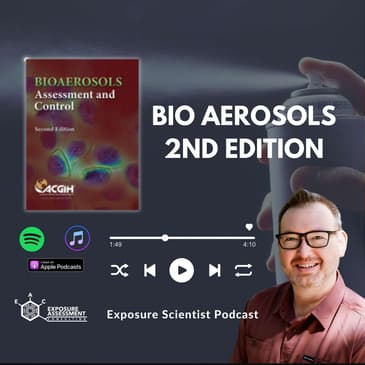
Welcome back to The Exposure Scientist podcast! On today's deep dive, your host, Dr. Alex LeBeau, explores the latest updates on bioaerosol assessment with a focus on a groundbreaking new publication from ACGIH — the second edition of the "Bioaerosol Assessment and Control" reference book. First released in 1999, this foundational text has been extensively updated with the latest research, techniques, and regulatory guidelines to help industrial hygienists and other professionals navigate the complexities of biological particles and their impact on health. Dr. LeBeau, who co-authored a chapter in this new edition, breaks down key topics including antimicrobial agents, application methodologies, and the rigorous processes involved in registering these agents with regulatory bodies like the US EPA. Whether you're an industry veteran or new to the field, this episode is packed with invaluable insights on maintaining a safe and healthy indoor environment. Tune in to learn more!
Contact Dr. Alex LeBeau at Exposure Consulting for exposure litigation support or Exposure Science Consulting.
[00:00:00] You might not realize it, but we are exposed to dozens of hazards every day. Can any of these hazards negatively impact your health? Definitely, this is the Exposure Scientist podcast. My name is Alex LeBeau and here.
[00:00:15] We answer your questions and concerns on what you may be exposed to every day. Welcome to the Exposure Scientist podcast. The views expressed in this podcast may not be those of the host or management. This podcast is for informational purposes only and should not be considered health advice.
[00:00:34] It is recommended that you consult the Exposure Scientist to discuss the particulars of your Exposure scenario. Hello, and welcome to today's episode of the Exposure Scientist podcast. My name is Alex LeBeau. Today we are going to be discussing an interesting and great new publication
[00:00:52] that has come out from ACGIHs. Anyone who is familiar, ACGIH is the American Conference of Governmental Industrial Hygenists. They've been around for many years and they have for great resources to individuals on a number of different fronts.
[00:01:08] The resource that I will be discussing today is the publication or second edition of the Bioaerosol Assessment and Control reference book. If anyone is familiar with the original version that came out in 1999, that was a great publication that has been a book of reference for a number of
[00:01:30] different organizations and industrial hygienists for many, many years. And as of 2018, 2019, there was a renewed effort to update that book for current issues using the knowledge and experience gathered over the last 20 years since the previous publication to work on a new edition updated with a lot more information.
[00:01:58] Use that basic information that was in the original book but grow and expand upon it. So I had the opportunity to do that when one thing that was reinvigorated, ACGIH was something called the Bioaerosol's Committee if you're somewhat familiar
[00:02:14] with AIHA or ACGIHA has the indoor environmental quality committee of which I was a chair for a while, recently. ACGIH has a Bioaerosol's Committee. Very similar, I'll say, interest area. There's a lot of overlap people who are interested in working on the AIHA.
[00:02:34] A QQM and they are also on the ACGIH. I'll say Bioaerosol's interest group. I am, but on the ACGIH by AIHA, I'll come in and it was called the member candidate that someone who is interested
[00:02:46] becoming a member of the committee itself, that is acknowledged and accepted by ACGIH. And one of the opportunities that I had, I'll continue to be a member candidate of the committee who is working on the Bioaerosol assessment control book.
[00:03:03] This includes the ability to look at the material that's being made available, offering some recommendations on it and even having the opportunity to co-author one of the chapters in the book. So for people who are on video, I'm just going to show this to you.
[00:03:20] This is the second edition Bioaerosol assessment and control book. It was originally called the Red Book. This one is similar in color. It has a little more finer detail in the front.
[00:03:31] The old one that's sitting on the shelf behind me, but it's still, I'll say, the Red Book. And a lot of people have referred to this book, the Red Book or the ACGIH Bioaerosol assessment control book
[00:03:44] as the gold standard for the impact of biological particles on everyday lives or human health. And I think it's a great opportunity if you are new in the field to familiarize yourself with this book.
[00:04:00] If you're interested in door environment, a quality is got a lot of great information on their sampling techniques or risk assessments. The basis for health concerns sampling strategy and planning analysis or sample analysis, data interpretation. There's lots of good information in here.
[00:04:19] It's a good primer for if you are wanting to do this as your career, wanting to do this in your everyday life.
[00:04:28] Or just kind of a reminder, maybe it's a kind of an update for people who've been doing it in a while, just to see what new research has been done, what new research is available and how the reference book is kind of organized.
[00:04:39] So the one chapter that I had co-authored in here is called the antimicrobial agents chapter. Now, originally this chapter and the original book was called referred to as biosides.
[00:04:56] Biosides are still a term that is used across the globe to talk about something that's going to have an antimicrobial effect or antimicrobial activity on a microbiological agent.
[00:05:11] But we updated the chapter title to fit more within the US EPA regulatory scheme. So if you go look at the five for stuff now, that stuff is now referring to things as antimicrobial agents.
[00:05:28] If you go to the EPA pesticide manual, you can go and see that it's referred to as antimicrobial agents. Now again, EU still uses a term biosign but collectively and domestically we refer to these as antimicrobial agents.
[00:05:38] So we updated the chapter to talk about antimicrobial agents and what their effects are, what they do, what types of antimicrobial agents are out there.
[00:05:52] And what they mean so there's a lot of good information here goes through public health antimicrobial pesticides that defines those it gives you lots of references.
[00:06:01] I have the chapter here, I'll just go through within this chapter alone there are 105 references. There's a lot of good information and for where do you to go find it online to say listen to you know, I'm using the reference book but I can even easily just go get it from the source itself just so you have both.
[00:06:19] So I talked about public health and antimicrobial pesticides, non public health antimicrobial path, this pesticides it goes through we talk about animal diseases and biopesticides.
[00:06:30] We've also in here include EPA definitions as this is heavily again geared domestically talking about types of antimicrobial agents with their sanitizers just effect and sterilants, fungicides, virulocides that's all included in here.
[00:06:48] Touches on health, Canada, touches on FDA but does go through more detail on than the last chapter did on the registration process because I think that's important for people understand who are using these products.
[00:07:01] What the process is for registration you know whenever we talk about pesticide antimicrobial products for use as pesticides you know in this laid out in this chapter. When should you use them how do you use them where do you use them when should you not use them.
[00:07:17] You know that's all evaluated and data requirements from EPA that stuff has to be submitted for registration purposes or has to be safety data that submitted toxicity studies we talk about some of the toxicity studies in here so you can understand that it's not just a quick process to get through.
[00:07:36] It is a there's a lot of data requirements and it even talks about in here if you're interested in registering with the US EPA or health Canada.
[00:07:47] You can have was called pre registration consultations with the agency listen you know explained to them lay out to them give them presentations this is what we are interested in doing.
[00:07:57] This is what we'd like to do this is a basic understanding of our antimicrobial agent this is a societal activity.
[00:08:05] And get their feedback and you know it may take a few days to get you know I forgot what the turnaround time is currently during COVID there was a different turnaround time for getting responses. But there's.
[00:08:19] A feedback process they lay out things that they think based on what they know or based on what you supply about it to them what needs to be done whether there's a key toxicity testing whether they require some chronic toxicity testing.
[00:08:33] What product chemistry can you provide you know we want to know all about the active ingredient this is very much for the active ingredient that we're discussing here.
[00:08:41] And within chapter itself there's a discussion of the active ingredient versus in arts if you are not familiar you know most the active ingredient is the ingredient that has the antimicrobial activity and there and the in arts are other things are included in their.
[00:08:58] The surfactants is something that's going to a prolonged shelf life or versus degradation so that's all included in the final product itself but again they're testing is interested in the active ingredient.
[00:09:11] Again product chemistry for the same thing efficacy data this is always important and then people I don't think appreciate this enough is the understanding of what is required from EPA and efficacious activity.
[00:09:23] For the product you know they have specific guidelines and they're discussed within the chapter their reference within the chapter I believe we even included. Reference yeah there's there reference guidelines is talking about CFR and here code effect for what is regulations.
[00:09:41] And what is included it's even referencing the actual tests themselves within the reference section for discussion of this is what they want to see for a real side this general disinfectant or something is going to be included in this effect and this is how you perform the test.
[00:10:00] I think it's important you know these are not things that you're going to be able to do yourself as far as performing tests you have to contract with the laboratory and you have to get them to understand what your product is you know even discuss following your consultation with the EPA.
[00:10:15] Approaching say this is what EPA would like to see they can use the guidelines they can show that this effective they can show those in effect of a log reduction and the concentration over a certain period of time following.
[00:10:26] The guidelines that are set up by EPA and I think that's important. For a free 15 minute consultation to discuss the specifics of your exposure scenario exposure science covers a broad subject area including tax ecology and industrial hygiene and risk assessment.
[00:11:14] From occupational community or environmental exposure exposure scientists apply scientific methodologies to understand exposure risks in applied controls when necessary. We at exposure assessment consulting have this expertise. Please reach out to us info at exposureconsulting.com for a free 15 minute consultation to discuss the specifics of your exposure scenario.
[00:11:45] Understanding all this is key to selection and whether you should use or should not use it in which scenarios.
[00:11:54] Even with the in here we discussed the application methodology EPA is going to evaluate and say, okay how did you apply it during your tests was it appropriate the way that you applied it because you show that it could be effective against the target organisms target microorganisms.
[00:12:11] In the methodology that's all going to have to be laid out you know there may be if you have a pre wet wipe if you have something that's going to release an air solve if you have something that's going to serve as a few.
[00:12:24] All those different individual tests are likely going to be needed by if EPA to establish the different application methodology so we go through that here as well.
[00:12:34] We also talk about the antimicrobial use selection and application what are the what are the use conditions you know what are the use conditions for occupied spaces what are they difference for different settings.
[00:12:47] We have to do things differently in health care settings versus non health care settings or even food context scenarios that's all laid out here and well as well because again it's not it's it's typically. For these applications it's a use scenario.
[00:13:01] How are you using it where are you using it and why are you using one big focus we have in the chapter is is it necessary to use the disinfect not all scenarios are going to be the same there's not no one size fits all.
[00:13:16] Guideline for every scenario you're going to look at your unique scenario and determine whether or not the scenario that's being presented to you is the antimicrobial necessary. Or is there a way that you can remove impacted building materials in such a way that antimicrobial use is not needed.
[00:13:36] You know that is a lot of things to think about I say impacted building materials well we can go beyond this because we talk about it in here as well water.
[00:13:44] You know what are we using for disinfecting the water there's many different types that you could be that could be applied in the water setting as well is it appropriate to have a secondary disinfectant system to supplement the primary disinfectant from the public water utility.
[00:14:00] We get in here as well and as a follow on to the original chapter we discuss antimicrobial activity ingredients this is not a all encompassing. Coverage there are there are more books about that other encompassing of all pesticideal products.
[00:14:20] This is the discussion of some that may be applicable to the indoor environment we talk about water base dry formulations and gas vapor phase. We use the typical scenario so we go through the different types.
[00:14:35] I'll say general areas of antimicrobials and their use patterns we even introduce here some antimicrobial material preservatives since more and more they're being integrated into textiles for using the indoor environment what are the.
[00:14:52] The targets products how are they being used what pesticides or when I think of my career boes are being used within those products and also nano base materials how are those. Being applied with scenarios.
[00:15:07] I'm going to some of the discussion of other antimicrobial products and this other antimicrobial products I'll say are novel new products where research is ongoing so we want to present where things may go with this.
[00:15:20] In here there's a discussion and I'll say you know this is a statement EPA says a statement there's over 4,000 currently there's over 4,000 antimicrobial agents registered.
[00:15:30] Active ingredient agents registered with US environmental protection agency where is that going to go it's going to increase but what are the products or what are the processes are going to do that so we touch on that here.
[00:15:43] As well as slightly we get into it more and other chapters in the book for precautions for using antimicrobials. When should you use them when should you not use them again are there PPE that need to be used.
[00:16:02] Are there scenarios where you have to have an environment where it is not occupied think about vaporize hydrodynamic oxide VHP and their specific.
[00:16:16] Label requirements for occupation of spaces for VHP is being used and all the clearance methodologies establishing that the VHP is below any thresholds of concern and again we reference the TLVs.
[00:16:29] ACGIH TLVs in here so there's a lot to go that goes into antimicrobial use in a variety of scenarios and I think that's important because again a lot during COVID disinfectants were used the early on there's discussion of cleaning and disinfecting.
[00:16:50] And the proper methodology for doing that and additionally a lot of guidance that we at AIA put out was talking about cleaning and disinfecting facilities. And we're working on updating that guidance now to make it more applicable to all scenarios.
[00:17:08] And so to more scenarios I'll say like a general cleaning of this infection plan for facilities or not healthcare facilities if you think of healthcare obviously they're going to have a infection prevention control plans.
[00:17:19] But what are not healthcare facilities going to have they did have something in place a general cleaning a seasonal cleaning and maybe an atypical or pandemic level kind of scenario where you're using this products identify which products should be used.
[00:17:34] Have a Britain plan do all this stuff and you know this is all again laid out these are things to think about for antimicrobials.
[00:17:40] Is it practical to use is it does it makes sense to use this a scenario call for it and again with the safety you know when one example we have in here is you know and I came across this to the project.
[00:17:54] I'll say recently where someone discuss it the use of antimicrobial agents within operating HVAC systems or HVAC systems in general you know a don't you know we kind of laid out there don't apply these in operating systems that could spread whatever antimicrobial and non traditional format into the occupied space of a building but additionally.
[00:18:17] Is that product registered for use in an HVAC system I think that's key as well you know you have to read the label.
[00:18:26] And understand does the label allow for use in HVAC systems. HVAC systems and if it doesn't there's a there's a reason why they may not show this be effective in the for antimicrobials within the system or in delivery mechanism.
[00:18:42] It may be presenting a health hazard to those that are in there if there's any residual that may be released over certain amount of time there's a lot that goes into thinking about.
[00:18:56] Where to apply these materials in the safe manner and that's what the key really is a safe manner evaluate this scenario if you don't have it now directs participants come in and do this scenario and this is another thing we'll I'll say discussion here there are some.
[00:19:15] Products I'll say that are labeled that are not I'm trying to think the best way to say this there they're not. You don't have to send information to EPA for them to evaluate it but they do have to understand you have to have efficacy data on those materials.
[00:19:42] These products are typically referred to as EPA as regular pesticide devices you know they are pesticide devices that physically or mechanically destroy repell preventative and the gay pests that are distinct from antimicrobial pesticides.
[00:19:57] It does not preclude you from having to have data on hand it on file that the information does not have to be submitted to EPA but the better have your backup of this information some of the.
[00:20:11] Examples that are given are an ultra violent light devices insect trap sound generation water air treatments to design a reduce or eliminate microorganism so there.
[00:20:22] There are other products out there as it said a regular pesticide devices that are covered in here as well another area that I had thought about is. They something that came up during the pandemic that has grown recently are these antimicrobial surface coatings that.
[00:20:41] Provide long lasting effective this on surfaces so that's their intent those products are. I'll say novel and the way to operate and they are I think becoming more and more prevalent out there.
[00:20:59] There are products that you can spray on and once it has I'll say gone through a time for a quote, curing process to adhere to the surface it relates antimicrobial activity over certain amount of time I think.
[00:21:13] Per the test methodology and don't quote me on this but I think it was up the seven days for how long had to be effective so it could say that it had that long lasting effect there's guidance out there I don't have it front of me, but.
[00:21:27] It is out there to check. So there's a lot that goes on with antimicrobials. It may be a boring subject for some. It's stuff that have worked on previously and it is very interesting area because there are times where antimicrobial agents are necessary for use.
[00:21:45] In their are specific scenarios where they are necessary for use, but identifying and using them judiciously when they are called for or when the scenario doesn't really need it. Pooros, semi-porous, non-porous materials. What is going to be used? Even selection on those types of materials on what's effective.
[00:22:07] One something may be effective on a porous material. That wouldn't be effective on semi-porous or vice versa. Something that's effective on non-porous is not going to potentially work on a porous material. All that's covered by EPA, the important thing is this gives you this chapter.
[00:22:25] This gives you the background for why things are done. A lot of people think operate on, well, I don't know why this is done. I'll just use it the way I want to use it. I've seen that plenty of times.
[00:22:38] Well, I'm just kind of using it and how I think we need to be done. But there's a reason why we do things. This chapter on antimicrobial agents kind of lays out why we do things.
[00:22:50] And I think it's a great opportunity to kind of get where we are currently on antimicrobial agents and use this for your reference material for why it is necessary to, if you have a remediation contractor that's coming in, challenge them on it.
[00:23:07] Understand what they're using, why they're using it? Are they following the label? Have them spell out what they're going to do? Go observe them using it. If they're using it in proper way or non-alable, approved way, stop them.
[00:23:20] Have a mechanism and your specification for stopping them, stopping work and re-evaluating. But review it before they get there, review it before you get out in the field. Even for those, pardon me, those products that I talked about for regulated pesticide devices.
[00:23:39] I've seen scenarios where the safety data that's provided is very lacking. This is an opportunity for industrial hygienists to provide some kind of third-party oversight. If you're an organization or someone who's thinking about putting something a cleaning,
[00:23:55] quote unquote cleaning device within your HVAC system, have some third-party oversight of the safety. Have them give the you the safety data. Review it, understand it, identify what exposure levels may be because I've seen some safety data that is very questionable, some of them's organizations.
[00:24:13] They say, well this is in this exposure isn't as bad as this, so you should be fine. That's not sufficient. You need to have a clear understanding of what the hazards are, what you may be exposing individuals to be too.
[00:24:27] Are there any health effects related to all say something that's being generated from any kind of device unintentionally or otherwise? So there's a lot that goes into this. Again, bio-air sauce assessment controls, second edition came out just a few months ago
[00:24:46] putting it on the camera again so everybody sees. It's a great, great opportunity for you to get up on this. Again, in the editors where sharing March from John Springston, they are very, say, John Jack Springston. They're very active in the organization.
[00:25:04] They did a great job of, I'll say, hurting us cats on getting the chapter completed. Each chapter completed and the final edition of the book again, finally issued this year. If you have any questions about the book or specifically the chapter of Antibiotic Robo
[00:25:24] Agents, please feel free to reach out. You can go to ACGI H's website to look for bio-air sauce assessment controls available both in a digital and print edition. It may be nice having both for your purposes. So you can go to their website and download it.
[00:25:41] I think members get a lower rate. So if you have any questions, please feel free to reach out. I hope you've got some great information from this and learn. If you weren't aware of the bio-air sauce book was released, learning it now. I think that's wonderful.
[00:25:57] Appreciate the opportunity for you joining us today and we'll talk to you in the next episode. Thank you so much.